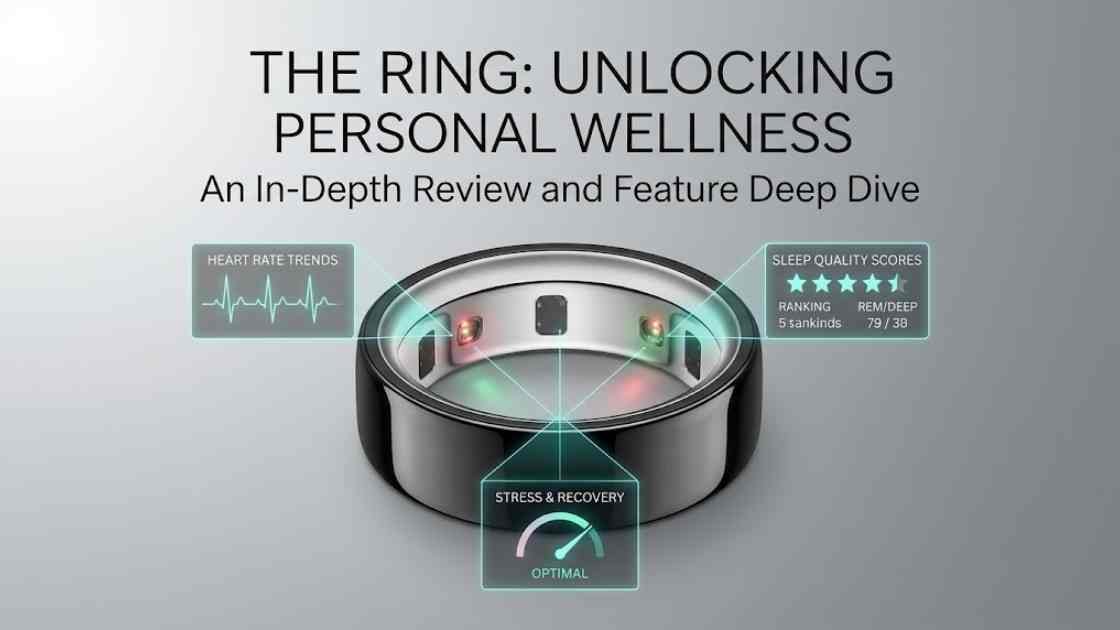
This Oura Ring 4 review UK verdict comes after eight weeks of wearing the thing every single day, through training blocks, broken sleep, and one very long-haul flight back from Dubai. Oura built its name on being the smart ring that actually understands sleep and recovery, and the Ring 4 is meant to be the most refined version yet. The question I get asked most, by clients and by readers, is simple: is it still worth the money once you factor in the membership fee.
As a certified personal trainer who has tested wearables on my own training for years, I care less about a spec sheet and more about whether the numbers hold up on the mornings that actually matter, the ones where you are tired, sore, or trying to decide whether to train or rest. Here is what eight weeks with the Oura Ring 4 actually taught me.
Oura Ring 4 Review UK: What’s New In This Generation
The Ring 4 moved to a fully flat, recessed sensor array on the inside of the band, which sounds like a small detail until you have worn a ring that snags on gloves or gym equipment. It does not. Oura also widened its size range and improved the titanium coating so it holds up better against scratches and daily knocks than the Gen 3 did.
Underneath, the sensors are largely the same idea as before: infrared PPG for heart rate, a skin temperature sensor, and an accelerometer, all feeding into Oura’s sleep, readiness and activity scores. What changed most is the software layer. Oura Advisor, the brand’s AI-powered coaching feature, now writes a short daily summary in plain English explaining why your readiness score moved, rather than leaving you to guess.
I noticed the difference immediately during a heavy training week in April. Instead of just seeing a low readiness number, the ring told me my HRV had dropped alongside a rise in overnight temperature, which was genuinely useful context rather than a number floating on its own.
Price and the Oura membership subscription explained
The Oura Ring 4 costs £349 for the standard titanium finish in the UK, with the Ceramic Heritage edition running higher. Amazon UK and Oura’s own store occasionally discount it during sales events, so it is worth checking current pricing before you buy rather than assuming £349 is fixed.
Here is the bit people underestimate: you also need the Oura membership, which costs £5.99 a month, to unlock almost everything beyond a raw heart rate number. No membership means no sleep staging, no readiness score, and no Oura Advisor summaries. Over two years that adds roughly £144 on top of the ring itself.
I know, paying monthly for a ring you already own feels a bit cheeky. Bear with me on this one though, because that fee funds the interpretation layer, and the interpretation is genuinely the reason people stick with Oura over cheaper rivals. Whether £5.99 a month is worth it depends entirely on how much you actually read and act on the daily insights, not just glance at a number and move on.
Oura Smart Ring 4 | Buy on Amazon | £349
How accurate is the Oura Ring 4? Sleep, heart rate and readiness
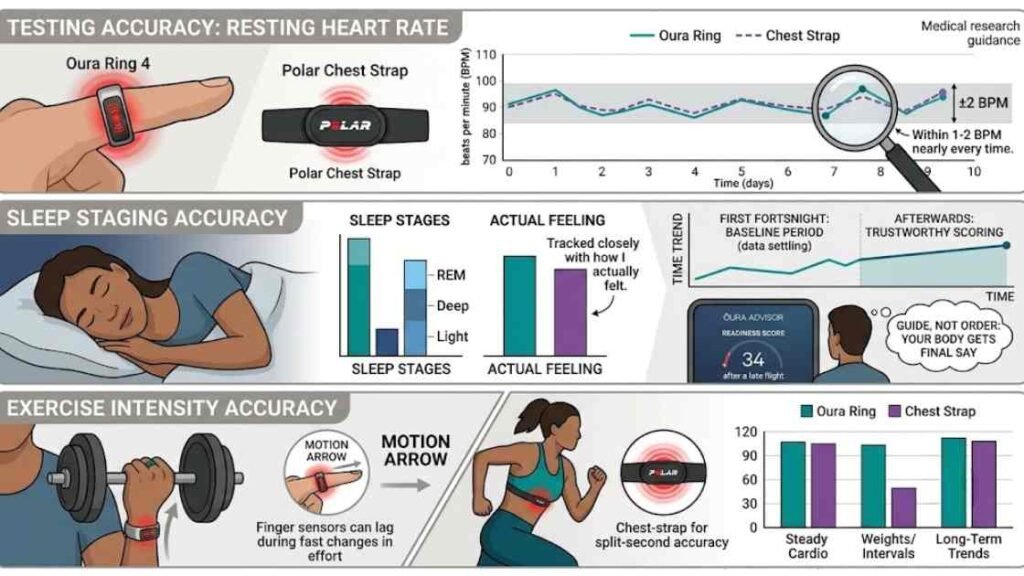
Accuracy is where any Oura Ring 4 review UK reader actually wants answers, so here is the honest version rather than the marketing one. For resting heart rate, I compared the ring against a Polar chest strap on ten separate mornings and it landed within one to two beats per minute almost every time. That is a strong result and matches what I would expect from a well-calibrated finger sensor at rest.
Sleep staging is where Oura still leads the smart ring category. Its breakdown of light, deep and REM sleep tracked closely with how I actually felt on waking, and on the mornings after poor sleep the score reflected it honestly rather than being artificially generous. The first fortnight of data was noticeably rougher, which lines up with what independent reviewers have also found: the ring needs a baseline period before its scoring settles into something trustworthy.
An unexpected observation from my testing: the ring was occasionally too honest for my own good. On one morning after a late flight, the readiness score was so low I nearly cancelled a session I actually felt fine to do. Treat the score as a guide, not an order. Your own body still gets the final say.
For exercise, do not expect chest-strap precision. Finger-based sensors move more than a strap during weights or interval training, so readings can lag behind reality during fast changes in effort. The NHS notes that most adults have a resting heart rate of 60 to 100 beats per minute and recommends checking your pulse manually if anything feels consistently off, which is a good habit regardless of what your wearable says (NHS guidance on pulse checking and heart rhythm). For steady cardio and long-term trends, the Oura Ring 4 is excellent. For split-second interval accuracy, pair it with a chest strap.
Battery life and charging in real use
Oura quotes up to eight days of battery life, and in daily use I got closer to six to seven days with the always-on heart rate feature switched on. Turning that setting off stretches it further. A full charge from empty takes around 20 to 80 minutes depending on the dock, which is quick enough that a coffee break covers it.
The charging dock is a small puck that sits neatly on a bedside table, and I never once found myself hunting for a cable mid-week, which after years of testing bulkier smartwatches felt like a genuine relief. It is a tiny thing, and yes, it does matter more than you would expect once you live with it daily.
The Oura app, Oura Advisor and cycle tracking
The app is still the strongest part of the entire package. Readiness, sleep and activity scores sit on the home screen with a plain-English explanation underneath, and the newer Oura Advisor chat feature lets you ask follow-up questions like why your score dropped or whether you should train today, and get a genuinely useful answer rather than a generic tip.
For women specifically, the cycle and temperature insights remain more mature than most rivals. The ring tracks overnight temperature shifts and uses them to estimate your cycle phase, flag likely ovulation windows, and explain how that might be affecting your sleep and recovery. I found this section particularly useful during a training block where fatigue was creeping up and the temperature data gave me an explanation I would not have connected on my own.
The app also plays reasonably well with other services. It syncs with Apple Health and, on Android, with Google Fit and Health Connect, so your data does not get stuck in one silo.
Design, comfort and getting the sizing right
The Ring 4 is light, comfortable, and genuinely discreet. I wore mine to a client meeting in central Birmingham and nobody clocked it as a gadget rather than jewellery. The titanium finish resists scratches noticeably better than the Gen 3 did, and the fully recessed sensor bed means it no longer catches on gym gloves the way older Oura rings sometimes did.
Order the free sizing kit before you buy the actual ring. Fingers genuinely change size with temperature, time of day and time of the month, so a ring that is even half a size out gives you patchier readings and a looser or tighter fit than you want. I wore my sizing samples for two full days each before ordering, and it saved me from ordering the wrong size, which is a common and completely avoidable mistake.
Who should buy the Oura Ring 4 (and who shouldn’t)
Buy the Oura Ring 4 if sleep and recovery insight is genuinely the reason you want a wearable, if you would rather wear a ring than a bulky watch, and if you are comfortable paying the monthly membership for the interpretation layer that makes the data useful. It works equally well on iPhone and Android, which matters if your household mixes phone brands.
Skip it if you want live workout stats, GPS mapping, or on-wrist notifications, none of which a smart ring is designed to do. Skip it too if a subscription fee for hardware you already own is a genuine dealbreaker rather than a mild annoyance, in which case a rival like the Samsung Galaxy Ring 2 or RingConn Gen 2, both subscription-free, deserve a look first.
Writing this as Priya Nair for GadgetsBuzz, I have recommended the Oura Ring 4 to several training clients who wanted better sleep data without another watch buzzing on their wrist all day, and the feedback has consistently been that the app is what keeps them engaged, not just the hardware. If you want the direct head-to-head against Samsung’s subscription-free rival, our Samsung Galaxy Ring 2 vs Oura Ring 4 UK comparison breaks down exactly which one suits which kind of buyer.
Oura Ring 4 UK price and where to buy
The Oura Ring 4 is available directly from Oura’s UK store and from Amazon UK, with occasional stock and colour variation between the two. Buying through Amazon UK means standard Prime delivery windows and an easier returns process if the sizing kit turned out not to match the actual ring for you.
Oura Smart Ring 4 | Buy on Amazon | £349
Oura Ring Sizing Kit | Buy on Amazon | £4.74
If you are still weighing up smart rings against a more traditional tracker, our guide to the Oura Ring Gen 4 vs Evie Ring comparison is worth reading next, and if heart rhythm tracking specifically is your priority, see which fitness tracker can detect AFib. For readers focused purely on better nights, our piece on the rise of smart sleep technology pairs well with any of these devices.
Frequently asked questions
Is the Oura Ring 4 worth it in the UK in 2026?
Yes, if sleep and recovery tracking is your main reason for wanting a wearable and you are willing to pay the £5.99 monthly membership. If you want a subscription-free alternative, the Samsung Galaxy Ring 2 is worth comparing first.
Do you have to pay a subscription for the Oura Ring 4?
In practice, yes. Without the Oura membership you only get a basic heart rate reading. Sleep staging, readiness scores and the Oura Advisor summaries all sit behind the £5.99 a month membership.
How accurate is the Oura Ring 4 for heart rate?
Resting heart rate accuracy is strong, typically within one to two beats per minute of a chest strap in my testing. During fast-changing exercise intensity, expect some lag, as with any finger-based sensor.
How long does the Oura Ring 4 battery last?
Oura quotes up to eight days. In daily use with always-on heart rate enabled, expect closer to six to seven days, with a full charge taking 20 to 80 minutes.
Does the Oura Ring 4 work with an iPhone and Android?
Yes. Unlike the Samsung Galaxy Ring 2, the Oura Ring 4 works equally well with iPhone and Android, syncing with Apple Health, Google Fit and Health Connect.
The bottom line
The Oura Ring 4 remains the smart ring to beat for sleep and recovery insight, and eight weeks of daily wear did not change my mind on that. It is not cheap once you add the membership, so go in with your eyes open about the running cost, and decide honestly whether you are the kind of person who will actually read the daily insights rather than glance and forget.
Priya Nair is a certified personal trainer who tests wearables through real training for GadgetsBuzz. This article contains affiliate links. We only recommend products we genuinely rate. This is general guidance only. Always consult your GP or a qualified professional for personal advice.