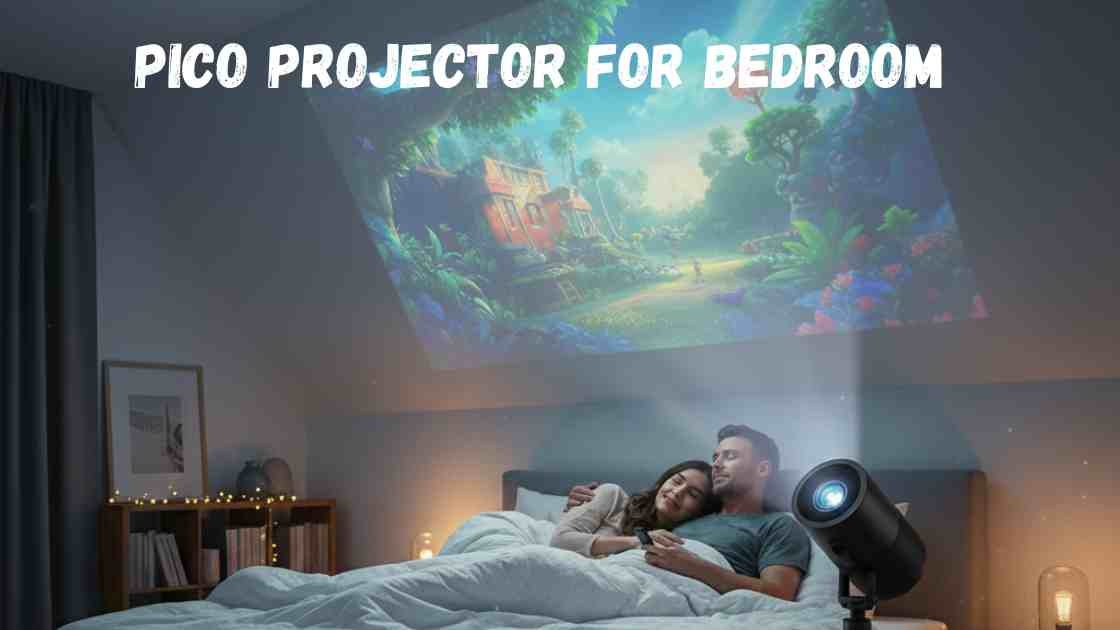
Imagine sinking into your bed after a long day, remote in hand, and with a single tap, your plain white ceiling or wall is instantly transformed into a massive, crystal-clear movie screen. This isn’t science fiction; it’s the magic of a modern Pico Projector for Bedroom. For years, setting up a “home cinema” meant lugging around bulky, noisy equipment, installing ceiling mounts, and dealing with tangled wires. Those days are officially over.
Today’s pico projectors, often no bigger than a soda can or a stack of sticky notes, have completely revolutionized how we watch content in smaller, personal spaces like a bedroom. They combine ultra-portability with smart streaming technology, making them the ultimate gadget for a truly cozy movie night experience. Whether you’re looking to binge-watch your favorite series, cast a relaxing ambient light show, or project a film festival onto the ceiling while you drift off, these pocket-sized devices are powerful and versatile enough to make it happen.
However, choosing the *right* pico projector for bedroom, the most intimate space in your home requires a unique focus. Criteria like raw brightness (lumens) take a backseat to more critical factors: whisper-quiet operation, effortless setup, and robust built-in streaming. The perfect bedroom projector fades into the background, letting the cinematic experience take center stage without the distraction of a loud fan or cumbersome setup.
This comprehensive guide is your deep dive into the features that matter most for a truly exceptional bedroom cinema. We’ll explore the silent technologies that keep the fan noise to a minimum, detail the best setups for wall and ceiling projection, and compare the top models on the market so you can finally transform your personal sanctuary into the home theater you’ve always wanted.
If you prefer a pocket-size screen over wall projection, our guide to the best foldable phones provides a great mobile-first alternative.
The “Silent Cinema” Imperative: Why Quietness is King for a Pico Projector for Bedroom
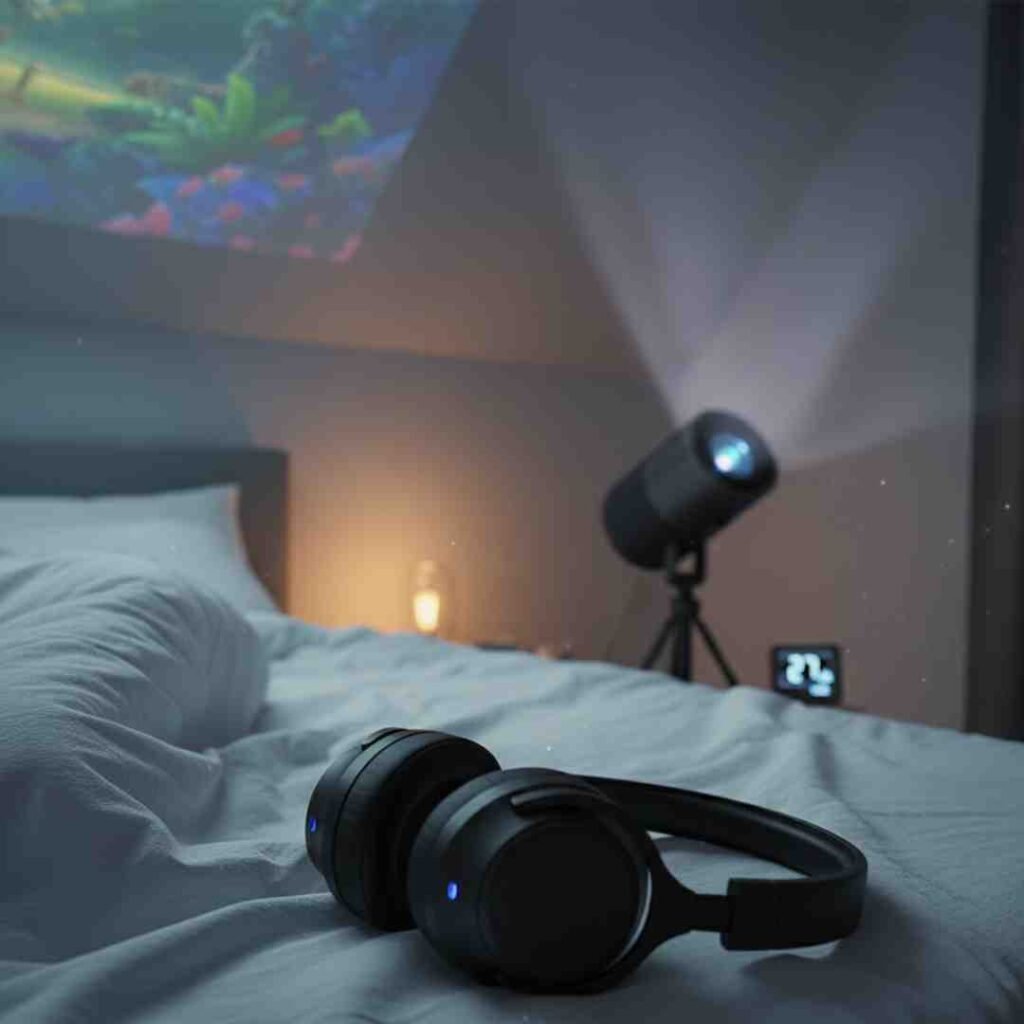
In any home theater setup, fan noise is an unavoidable reality of cooling a powerful light source, but in the peaceful, enclosed environment of a bedroom, a loud fan can quickly turn a relaxing movie night into an annoying distraction. For this reason, fan noise (measured in decibels or dB) becomes the single most critical specification when shopping for a pico projector for bedroom.. The difference between a slightly noisy model and a whisper-quiet one is the difference between immersion and irritation.
Many modern portable projectors use LED or laser light sources, which inherently generate less heat than older lamp-based projectors, allowing for quieter cooling systems. Generally, a noise level below 30 decibels (dB) is considered whisper-quiet and is what you should aim for in a dark, silent bedroom environment. For context, a whisper is typically around 30 dB, while a quiet library sits closer to 40 dB.
Leading models like the Anker Nebula Capsule 3 Laser have been measured at approximately “26.89 dB” from about one meter away, which is often described as “barely noticeable” in a quiet room, making it an excellent choice for light sleepers or for viewing dialogue-heavy films. Similarly, the Samsung The Freestyle 2nd Gen has been noted to run around “25 dB” when streaming, which is close to the lower end of the quiet spectrum. Paying close attention to this spec ensures that the only sound filling your room is the movie soundtrack.
Projecting Dreams: Mastering Wall and Ceiling Projection
The core benefit of a pico projector is its flexibility, and in a bedroom, that flexibility often translates to projecting onto the ceiling; the ultimate lazy-day viewing experience. However, not all mini projectors are equally suited for this task.
The Magic of Automatic Adjustment
To successfully project onto a ceiling or an awkwardly angled wall, a projector needs two key features: Auto Keystone Correction and Autofocus.
- Auto Keystone Correction: This feature automatically senses the angle of the projection surface and corrects the image into a perfect rectangle, even if the projector itself is tilted or placed off-center. This is indispensable for ceiling projection, allowing you to simply point the device upward from your nightstand or floor without manually fiddling with settings.
- Autofocus: This ensures the image remains sharp as you move the projector closer or further away from the surface, eliminating the need for a manual focus wheel every time you change positions (like moving it from a wall-facing shelf to the ceiling).
Flexible Stands and Portability
For ceiling use, the physical design is just as important as the smart software. Look for models that include a built-in, versatile stand or a highly-rated tripod mount. For instance, devices like the Samsung The Freestyle are designed with an integrated gimbal stand
that allows the projector lens to easily pivot 180 degrees, from a wall to a ceiling, in seconds. True pico projectors that are cylindrical, like the Anker Nebula Capsule series, often require a separate small tripod accessory to achieve the perfect ceiling angle, though their smaller size makes them incredibly easy to reposition.
Note: Pairing a budget 120 Hz smartphone with a compact pico projector can give you a powerful portable entertainment setup.
The Resolution and Brightness Balance for Cozy Viewing
Since a bedroom is typically a space where ambient light is easily controlled by closing curtains or turning off lights, you don’t need the thousands of lumens required for a bright living room or professional setting.
Optimal Brightness (ANSI Lumens)
Brightness is measured in ANSI lumens. Traditional home cinema projectors boast 2,000+ lumens, but a true pico projector for a dedicated dark bedroom thrives in the “200 to 550 ANSI lumen” range.
- Below 400 ANSI Lumens: This is ideal for a completely pitch-black room, maximizing contrast for deep blacks and rich colors. These models, like the Anker Nebula Capsule 3 (200 ANSI Lumens), are highly portable and battery-efficient.
- 400-600 ANSI Lumens: This “sweet spot” offers enough power to handle a small amount of ambient light, such as a lamp in a hallway or light filtering through a thin curtain, without washing out the image. Models in this range, such as the XGIMI MoGo 2 Pro (400 ISO/ANSI lumens equivalent), are generally a great compromise between brightness and battery life.
Aiming for Full HD Resolution
While some budget pico models still operate at a lower resolution (720p or less), for a high-quality, 100-inch “home cinema” experience, a native 1080p (Full HD) resolution is highly recommended. This level of clarity ensures that fine details, such as text or subtle textures in a film, remain sharp even when projected onto a large surface. Although some portable projectors support a 4K input, the actual *native* projection is often 1080p, and this is generally more than sufficient for comfortable bedroom viewing distances.
If portability is the priority, a budget smartphone plus headphones might suffice, but a pico projector gives the true cinema feel.
A World of Content: Integrated Streaming and Connectivity
The best bedroom projectors are essentially smart TVs in a cylinder. The convenience of a built-in streaming operating system (OS) eliminates the need for extra wires and external streaming sticks, adding immensely to the bedroom’s clean, minimalist aesthetic.
The most common and user-friendly platforms are “Android TV” and “Tizen OS” (used by Samsung).
- Android TV/Google TV: Found on brands like XGIMI and Anker Nebula, this OS provides native access to a vast library of streaming apps, voice control via Google Assistant, and seamless integration with your phone via built-in Chromecast.
- Tizen OS: Used by Samsung, Tizen also offers a full suite of streaming apps, AirPlay 2 support for Apple users, and unique smart-home features.
Ensure the model you choose supports all the major streaming services you use, particularly if you’re a loyal Netflix subscriber, as some older or less-premium Android TV models can have compatibility issues that require workarounds. Bluetooth connectivity is also crucial, allowing you to pair external Bluetooth headphones for private viewing or a separate, more powerful Bluetooth speaker for enhanced sound.
Top Pico Projectors for a Bedroom Home Cinema (Expert Picks 2025)
Creating the perfect bedroom cinema is about finding the rare balance between silence, clarity, portability, and smart convenience. The ideal pico projector for bedroom use must disappear into the background while delivering a sharp, cinematic image on your wall or ceiling without disruptive fan noise or complicated setup. After comparing real-world performance, brightness levels, noise output, smart features, and ease of ceiling projection, the following three models stand out as the best all-round pico projectors for a cozy, private home cinema experience in 2025. Each one excels in a different way, whether your priority is ultra-portability, maximum brightness, or effortless ceiling projection.
🔹 Anker Nebula Capsule 3 Laser
The Anker Nebula Capsule 3 Laser is the definition of true pocket cinema for the bedroom. With its ultra-compact soda-can design, built-in battery, and laser light source, it is built for users who value complete freedom and silent performance above all else. Its whisper-quiet fan operation, hovering around the 27 dB mark, makes it ideal for late-night ceiling projection without disturbing sleep. The laser clarity gives it sharper contrast than most LED pico projectors in its size, and with Android TV built directly into the device, it feels more like a smart bedroom cinema system than a simple projector. This model is perfect for minimalists who want cordless, clutter-free movie nights directly from the bed.

- Laser Engine to Illuminate Your World: Experience vibrant visuals with this laser projector, featuring a laser light sou…
- Travel Light, Project Big: At just 2 lb (900 g) and 90% smaller than others with similar brightness, NEBULA Capsule 3 La…
- Marathon Viewing Sessions: Watch a full 2.5-hour movie or listen to 8 hours of music on a single charge with Capsule 3 L…
🔹 XGIMI MoGo 2 Pro
The XGIMI MoGo 2 Pro is designed for users who want the brightest and most powerful viewing experience in the pico projector category without sacrificing portability. Delivering up to 400 ISO lumens of brightness and a crisp native 1080p resolution, it handles light-controlled bedrooms with ease and even performs well in slightly lit environments. What truly sets it apart is its advanced ISA 2.0 intelligent screen adaptation system, which handles autofocus, keystone, obstacle avoidance, and screen alignment automatically. While it lacks an internal battery, its stronger sound system with dual 8W speakers and consistently bright image make it an excellent choice for those who want the most immersive bedroom cinema experience without stepping into bulky projector territory.


🔹 Samsung The Freestyle 2nd Gen
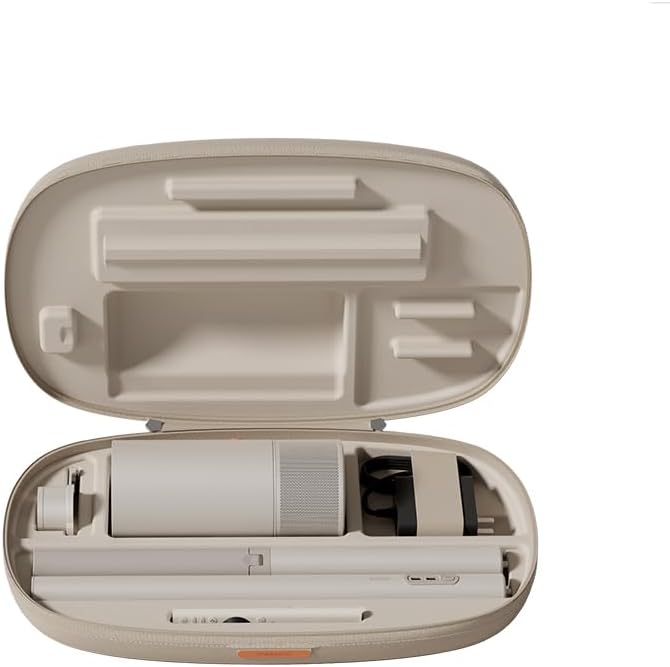
Samsung The Freestyle 2nd Gen is uniquely designed for effortless bedroom and ceiling projection with its built-in 180-degree rotating gimbal stand. This design allows you to seamlessly switch from wall to ceiling projection in seconds without needing a tripod. Running on Samsung’s Tizen OS, it offers a full Smart TV experience with built-in access to major streaming apps and AirPlay 2 support for Apple users. While its brightness sits lower than the MoGo 2 Pro, its exceptionally quiet operation and ultra-lightweight design make it a favorite for relaxed, cozy bedroom viewing. It also integrates well with Samsung’s gaming and smart home ecosystem, making it appealing for users already invested in the Samsung environment.


Top Pico Projectors for a Bedroom Home Cinema: A Comparison
To help you narrow down the best choices that strike the ideal balance of quiet operation, portability, and performance for a bedroom, here is a comparison of some of the leading models that fit the “portable-pico” category:
| Feature | Anker Nebula Capsule 3 Laser | XGIMI MoGo 2 Pro | Samsung The Freestyle 2nd Gen |
| Native Resolution | 1080p (Full HD) | 1080p (Full HD) | 1080p (Full HD) |
| Brightness | 300 ANSI Lumens (Laser) | 400 ISO Lumens (Equivalent to ANSI) | 230 ANSI Lumens (Advertised as 550 LED Lumens) |
| Light Source | Laser (ALPD) | LED | LED |
| Built-in Battery | Yes (Approx. 2–2.5 hrs) | No (Requires power or separate power bank/base) | No (Requires power or separate battery base) |
| Fan Noise (Quietness) | ~27–30 dB (Whisper Quiet) | <30 dB (Quiet) | ~30 dB (Very Quiet) |
| Weight / Portability | Soda Can Size (2.1 lbs / 0.95 kg) | Small Cylinder (2.4 lbs / 1.1 kg) | Unique Tilt/Gimbal Design (1.8 lbs / 0.8 kg) |
| Ceiling Projection | Yes (Requires Tripod) | Yes (Requires separate stand or tripod) | Yes (Built-in 180° Stand) |
| Smart OS / Streaming | Android TV (Built-in) | Android TV 11 (Built-in) | Tizen OS (Built-in) |
| Key Selling Point | Highly Portable, Laser Clarity, Built-in Battery | Highest Brightness (400 ISO), Great Sound (2x8W), ISA 2.0 Auto Setup | Effortless 180° Setup, Lightest Weight, Samsung Smart TV/Gaming Hub |
Setting the Mood: Audio, Battery Life, and Accessories
A truly immersive bedroom cinema experience is more than just a big picture; it’s an entire sensory environment. The right pico projector should seamlessly integrate with your existing comfort rituals.
Built-in vs. External Audio
Due to their compact size, pico projector speakers are typically adequate for personal, low-volume bedroom listening, but rarely deliver deep, booming sound. Many advanced models, like the XGIMI MoGo series, include decent built-in stereo speakers that offer richer, more bassy audio than their cheapest counterparts. However, for a true “home cinema” feel, most enthusiasts prefer connecting to an external audio source. The key here is “Bluetooth out”, which allows you to wirelessly pair the projector with a soundbar, your smart bedroom speaker, or even a pair of noise-canceling headphones for late-night viewing without disturbing a partner or roommate.
Since many pico projectors have modest built-in speakers, you might want to check our top budget gaming headsets for better sound on movie night.
Battery Life and Power Flexibility
For bedroom use, battery life offers maximum portability for ceiling projection. An ideal battery life for a standard movie or a few episodes of a show is around “1.5 to 2.5 hours” on a single charge. Be aware that the brightest picture settings often consume the most power and will reduce battery life; if you plan to watch for extended periods, simply plugging the unit into the wall or using a high-wattage USB-C power bank for models that support it, is the most reliable solution.
Beyond the Screen: Ambient Functionality
Some high-end portable models are now including features that go beyond simple video playback. Features like “Ambient Light Mode” allow the projector to display light shows, moving artwork, or customizable colors, effectively turning the projector into a large-scale mood lamp that can be used even when you aren’t actively watching a movie. This adds significant value for making your bedroom a relaxing, multi-purpose space.
Note: For a truly minimal bedside setup, pair your projector with a smart wireless charger stand.
Seamless Setup: From Box to Bed in Minutes
A clunky setup process is the enemy of a cozy, spontaneous movie night. The best pico projectors are designed for near-instant deployment, a feature often grouped under “Intelligent Screen Adaption” or similar terms. This technology is particularly helpful for bedroom users who might move the projector from a wall to the ceiling and back again. Premium features to look for include:
- Intelligent Obstacle Avoidance (IOA): The projector automatically detects and moves the projected image away from obstacles like picture frames, light switches, or decorative items on the wall.
- Intelligent Screen Alignment (ISA): It automatically identifies the edges of a separate projection screen (if you use one) and perfectly fits the image to its borders. These smart features ensure that you don’t spend more than a few seconds aiming the projector and getting a perfectly sized, focused, and aligned picture, letting you get right to the streaming.
Conclusion
The era of the bulky, heat-generating projector is over, especially for the personalized comfort of the bedroom. Modern pico projectors offer the perfect trifecta of features: a cinematic Full HD picture, a noise level so low it’s virtually imperceptible, and the freedom to project onto nearly any surface, be it a bedroom wall or the ceiling above your pillow. By prioritizing models in the 30 dB or lower range and those with automatic setup features like keystone correction, you ensure that your investment truly enhances the relaxation and ambiance of your room.
Moving forward, the advancements in laser and LED technology will only continue to drive down size and noise while increasing brightness and resolution. A pico projector is not just a gadget; it’s an interior design tool and a lifestyle upgrade, allowing you to maximize the use of space in your room without committing to a permanently mounted TV. It’s the ultimate upgrade for your self-care and entertainment, transforming an ordinary space into an immersive, private, and incredibly cozy escape.
Pico projectors now sit among the top smart-home gadgets of 2025, see our full list of must-have devices.
Frequently Asked Questions (FAQs)
1. Is 300 ANSI Lumens bright enough for a bedroom projector?
Yes, absolutely. For a dedicated bedroom cinema where you can easily control ambient light (by closing blinds or turning off lamps), 300 ANSI lumens is sufficient for a clear, vibrant picture up to about 100 inches. Since the goal of a home cinema is deep contrast and immersive color, which is best achieved in a dark environment; a projector in the 200–400 lumen range will actually look fantastic and provide better blacks than a much brighter projector used in the same darkened room. If your bedroom frequently has a fair amount of uncontrolled daylight or you prefer to watch with a small reading lamp on, you might consider stepping up to a 500–600 lumen model, but for true movie night comfort in the dark, 300 lumens is the sweet spot for a pico device.
2. Can a pico projector replace my bedroom TV entirely?
A pico projector can certainly serve as a primary entertainment display, but whether it *replaces* a TV depends on your viewing habits. For nightly streaming, casual gaming, and creating a massive, immersive picture, a 1080p pico projector with built-in streaming is an excellent, flexible substitute. However, pico projectors generally have limitations compared to a dedicated TV: they are dimmer (struggle in bright daylight), have a smaller image if the projector is placed very close to the surface, and usually lack the ultra-low input lag needed for competitive console gaming. If your primary need is a large, cinematic picture in a dark or dimly lit room, the projector will offer an experience a TV cannot match.
3. Do pico projectors need a special screen, or can I project onto a colored wall?
Pico projectors are designed for maximum flexibility and can project onto any flat, light-colored surface, which makes a bare wall or ceiling a perfect canvas for casual viewing. While you will always get the best, most color-accurate picture by using a dedicated projector screen (especially a gray screen, which helps deepen blacks), it is not a requirement for a cozy bedroom setup. If your wall is a dark color, the image will be less bright and colors will be distorted, so aim for a projector with higher lumens and/or use a white sheet or portable screen for optimal results.
4. How do I project onto the ceiling, and what equipment do I need?
Projecting onto the ceiling requires a projector that can physically pivot and one that has automatic image correction features. Many of the best models, like the Samsung Freestyle, have a built-in 180-degree adjustable stand (or gimbal) that lets you point the lens straight up. If your model does not have this, you will need a small, flexible tripod that screws into the universal mount found on the base of most pico projectors. The most important part is the software: Auto Keystone Correction will automatically adjust the trapezoidal image shape created by the angle, ensuring you see a perfect rectangle without effort.
5. How long does the battery last on most portable models for streaming?
The battery life on most portable pico projectors is designed to accommodate a single feature-length movie or an average binge-watching session, typically lasting between 90 minutes and 2.5 hours on a single charge. This duration usually applies when the projector is set to its standard or economy power mode, as running the light source at maximum brightness consumes power much faster. For a true all-night movie marathon, you should plan on keeping the projector plugged into its power adapter, or utilizing a powerful external USB-C power bank if the model supports it for extended cordless use.
The Ultimate Choice: Mastering Portability, Clarity, and Silence
The search for the “Pico Projector for Bedroom” experience ultimately centers on finding the perfect balance between power and peace. The top recommendation for a true home cinema feel is to look beyond the cheapest “pico” models and focus on the slightly larger, yet still highly portable, smart projectors like the XGIMI MoGo 2 Pro or the Anker Nebula Capsule 3 Laser. These are the devices that offer the essential combination of a crystal-clear 1080p resolution and, most importantly for a bedroom, a fan noise level that hovers around the virtually inaudible 30 dB or lower.
To truly transform your room, prioritize models that offer instantaneous, automated setup, such as those with auto-keystone and autofocus, and look for integrated streaming (Android TV or Tizen OS). This ensures that the process of transforming your wall or ceiling into a movie screen takes mere seconds, maintaining the cozy, spontaneous vibe of your space. By choosing a model that masters portability, clarity, and silence, you are investing in a flexible entertainment hub that will enhance your nightly routine for years to come.
Reference Sources :
The 5 Very Best Portable Mini-Projectors
Best portable projector of 2025: Tested for streaming and presenting on the go