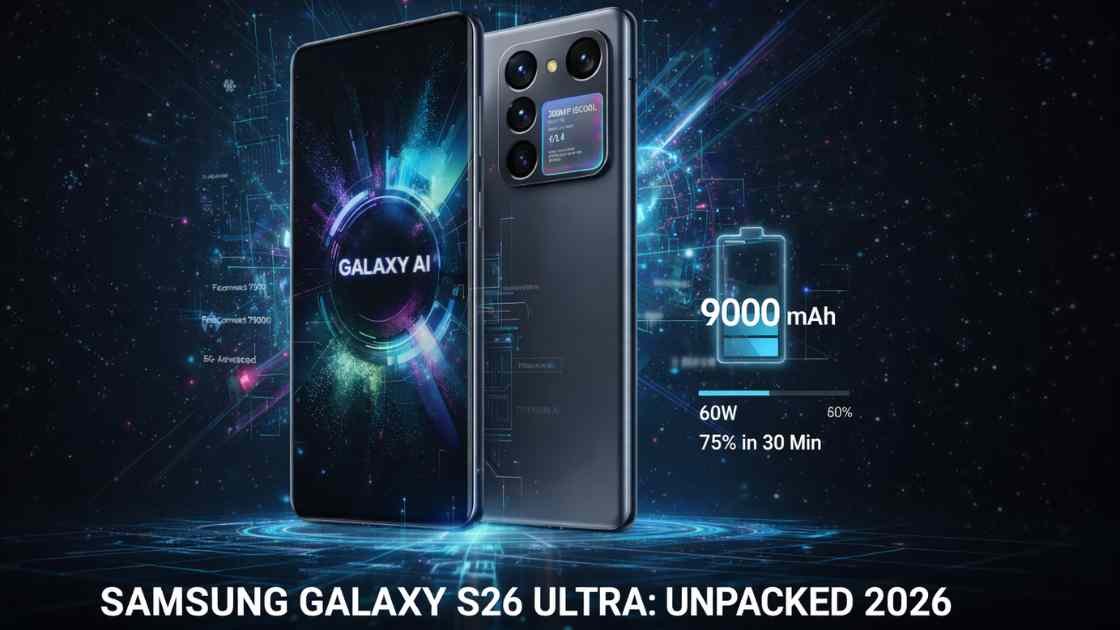
The highly anticipated Samsung Galaxy S26 Ultra leaks have begun to surface, slated for its official debut at the Galaxy Unpacked 2026 event, has become the subject of extensive speculation and a series of authenticated leaks. As an apex predator in the ultra-premium smartphone segment, the S26 Ultra is poised to introduce a confluence of advanced hardware and sophisticated artificial intelligence functionalities, aiming to redefine user experience and computational capabilities.
This comprehensive pillar page meticulously dissects the pre-release intelligence, scrutinizing leaked specifications, architectural advancements, and their profound implications for mobile technology. From its rumored imaging prowess to its processing core and intelligent software ecosystem, the S26 Ultra is positioned as a pivotal device for the 2026 smartphone market.
The Galaxy Unpacked 2026: Unveiling and Market Context
Samsung’s venerable Galaxy Unpacked event is confirmed for February 25, 2026, where the full Galaxy S26 series, with the S26 Ultra as its vanguard, will be officially unveiled. This timing is strategically placed to capture early market attention, preceding major industry conventions. Historically, Samsung’s Ultra series has consistently set benchmarks for innovation, pushing the envelope in display technology, camera capabilities, and computational performance.
For a detailed look at how the previous generation fared, see our Samsung Galaxy S25 Ultra Review (2025): AI, Camera & Performance Redefined, which explored the series’ shift toward sleeker titanium designs.”
The S26 Ultra is expected to continue this trajectory, consolidating Samsung’s leadership in a fiercely competitive global smartphone market.
The broader market landscape for 2026 is characterized by a complex interplay of factors, including projected global smartphone shipment declines. Counterpoint Research indicates an anticipated decrease of 2.1% in global smartphone shipments for 2026, primarily attributed to escalating component costs, particularly memory, and prevailing chip shortages.
Despite this volume contraction, average selling prices (ASPs) are projected to increase, reflecting both cost pass-through and a strategic industry pivot towards higher-margin, premium devices. In this challenging environment, vertically integrated entities with extensive product portfolios like Samsung and Apple are optimally positioned to navigate supply chain exigencies and maintain market share and profitability.
Imaging Prowess: The 200MP Camera System
Initial pre-release data for the Samsung Galaxy S26 Ultra conspicuously points towards a refined 200-megapixel (MP) primary camera sensor. This iteration builds upon the foundational high-resolution sensors seen in previous Ultra models, such as the Galaxy S24 Ultra and S25 Ultra, which also featured 200MP main cameras.
The comprehensive rear camera array is further expected to include a 50MP ultrawide lens, a 10MP telephoto lens offering 3x optical zoom, and a 50MP periscope telephoto lens capable of 5x optical zoom. The front-facing camera is anticipated to retain a 12MP resolution.
Evolution of Samsung ISOCELL Sensors and the 200MP Paradigm
Samsung’s leadership in image sensor technology, particularly its ISOCELL line, has been instrumental in the industry’s megapixel race. The company has consistently pushed the boundaries of pixel miniaturization and sensor architecture, transitioning from 108MP sensors in the Galaxy S20 Ultra to 200MP units in subsequent iterations.
The current 200MP ISOCELL HP5 sensor, featuring 0.5μm pixels, represents a significant milestone, optimizing optical response through technologies like Front Deep Trench Isolation (FDTI) and Dual Vertical Transfer Gate (D-VTG) to minimize optical crosstalk and enhance dynamic range. The S26 Ultra’s 200MP sensor is expected to leverage further refinements, potentially offering a wider aperture (f/1.4) for enhanced light gathering, improved low-light performance, and sophisticated multidirectional PDAF (Phase Detection Autofocus) and Optical Image Stabilization (OIS).
Technical Implications and Computational Photography
A 200MP sensor, while offering unparalleled detail for extreme cropping and large prints, primarily operates in conjunction with advanced computational photography techniques. Pixel binning, for instance, aggregates data from multiple adjacent pixels into a larger “super pixel” (e.g., combining 16 pixels into one for a 12.5MP output), significantly improving light sensitivity and reducing noise in challenging low-light conditions.
This approach allows the S26 Ultra to offer both ultra-high-resolution capture and superior everyday imaging. The substantial processing power demanded by such high-resolution sensors necessitates highly efficient Image Signal Processors (ISPs) and Neural Processing Units (NPUs) within the SoC to handle immense data streams, reduce noise, and apply real-time enhancements.
The leaked integration of “Photo Assist” with prompt-based image editing and updated generative photo editing tools underscores a deeper reliance on AI for post-capture refinement. These AI-powered features are poised to enable advanced functionalities like real-time background blur, enhanced night mode, AI video stabilization, and sophisticated object recognition, effectively translating raw sensor data into professional-grade imagery.
The ability to fine-tune sharpness and adjustable autofocus transition speeds for video further indicates a focus on empowering content creators and professionals.
The 300MP Frontier: Future Potential and Challenges
While the S26 Ultra’s leaked specifications confirm a 200MP main sensor, the broader industry is indeed exploring sensors with even higher resolutions. We previously explored the complexities of high-megapixel processing in our Comprehensive Camera Showdown between the iPhone 15 Pro Max and S24 Ultra, noting how Samsung’s hardware-heavy approach first challenged Apple’s software-first philosophy.
Samsung, a leader in this domain, has been actively developing ISOCELL 300MP sensors, designed to miniaturize DSLR-quality resolution into smartphone modules. Other manufacturers, such as Vivo, have also presented concepts for 300MP camera phones, emphasizing breakthroughs in sensor size, pixel-binning technology, and the immense processing power required to manage such data.
The advent of 300MP mobile cameras presents both unprecedented opportunities and significant technical hurdles. The advantages include unmatched detail, redefined digital zoom capabilities, and future-proofing for ultra-high-resolution displays and 8K+ video standards. However, the challenges are considerable: the generation of massive photo and video file sizes, substantially higher power consumption for processing, the requirement for ultra-fast processors and efficient software, and potential increases in device cost and bulk.
Given these complexities, the S26 Ultra’s adoption of a highly refined 200MP system, rather than an unproven 300MP, represents a pragmatic optimization of current technological capabilities and consumer utility. It is plausible that 300MP sensors will materialize in future Galaxy S-series or foldable flagships, but not as part of the initial S26 Ultra release.
Processing Power Redefined: The Snapdragon 8 Elite Gen 5

Central to the Galaxy S26 Ultra’s performance capabilities is the anticipated integration of the Qualcomm Snapdragon 8 Elite Gen 5 System-on-Chip (SoC). Leaks predominantly indicate that this formidable processor will power the S26 Ultra in key markets such as the US and China. However, some reports suggest a broader global deployment of the Snapdragon 8 Elite Gen 5. In other international markets, the device is expected to feature Samsung’s proprietary Exynos 2600 chip. This dual-chip strategy is a recurring pattern for Samsung, allowing for regional optimization and supply chain flexibility.
Architectural Speculation and Performance Benchmarks
The “Elite” moniker in Snapdragon 8 Elite Gen 5 suggests an enhanced or optimized variant of Qualcomm’s next-generation flagship SoC. Building on the advancements of its predecessors (like the Snapdragon 8 Gen 3 and Gen 4), the Elite Gen 5 is expected to incorporate significant architectural improvements across its CPU, GPU, and NPU components. These advancements are crucial for handling the increasing demands of generative AI workloads, high-fidelity mobile gaming, and advanced computational photography.
Qualcomm’s focus has been on improving on-device AI capabilities, moving processing from cloud dependency directly to the device. The Snapdragon 8 Elite Gen 5 is projected to feature a substantially more powerful NPU, enabling faster and more efficient execution of complex AI models. This dedicated AI processing hardware could significantly improve battery life and expedite features such as intelligent photo editing, live translation, and voice recognition.
Performance benchmarks are expected to demonstrate substantial gains over current-generation chipsets, offering superior multi-core performance, graphic rendering capabilities, and energy efficiency through advanced manufacturing processes, potentially leveraging 2nm Gate-All-Around (GAA) technology, where Samsung has already made strides with its Exynos 2600.
Energy Efficiency and Thermal Management
The pursuit of peak performance inevitably introduces thermal challenges. High-performance SoCs like the Snapdragon 8 Elite Gen 5 generate considerable heat under sustained heavy workloads. Leaks indicate that Samsung may integrate improved thermal management solutions, such as larger vapor chambers or advanced cooling systems, within the S26 Ultra.
These enhancements are critical to mitigate thermal throttling, ensuring the device can maintain optimal performance during demanding tasks like prolonged gaming sessions, 8K video recording, and intensive AI processing, thereby delivering a consistent and reliable user experience.
The Dawn of “Titanium AI”: Intelligent Innovation
The concept of “Titanium AI” for the S26 Ultra is not explicitly detailed in leaks as a distinct named feature, but rather an inferred synergistic integration. The Galaxy S24 Ultra introduced a titanium frame and prominently featured “Galaxy AI” capabilities. The Galaxy S25 Edge further emphasized “aerospace-grade titanium and powered by the revolutionary Galaxy AI.”
This suggests that “Titanium AI” refers to the holistic experience where the premium, durable titanium hardware framework encapsulates a suite of advanced, on-device artificial intelligence functionalities, collectively termed “Galaxy AI“.
On-Device AI Capabilities and the Galaxy AI Ecosystem
The S26 Ultra is expected to significantly deepen its integration of on-device AI, moving beyond cloud-dependent processing for enhanced speed, privacy, and offline functionality. Key AI features highlighted in leaks and previous Galaxy AI iterations include:
- Enhanced Image Processing: Beyond the raw megapixel count, AI will drive functionalities like “Photo Assist” for prompt-based image editing and generative AI tools for advanced photo manipulation. This allows for sophisticated object removal, intelligent recomposition, and professional-grade color tuning directly on the device.
- Natural Language Understanding (NLU) and Communication: Features such as “Live Translate” for real-time bilingual conversations, “Interpreter” for spoken translations, and “Chat Assist” for adjusting message tones are expected to be refined. These capabilities leverage large language models (LLMs) to provide seamless communication across linguistic barriers.
- Predictive Functionality and Productivity: “Note Assist” for organizing thoughts and summarizing content, along with AI-powered notification summarization and sorting, will streamline information management. Integration with AI search chatbots like Perplexity is also rumored, offering more intuitive and intelligent information retrieval.
- Personalized User Experience: On-device AI enables the device to learn user habits, anticipate needs, and adapt the interface and functionalities for a more personalized and proactive smartphone experience.
The potential for a dedicated AI accelerator chip within the S26 Ultra, separate from the main SoC, would further optimize these on-device AI tasks, contributing to improved battery efficiency and overall responsiveness.
Titanium in Design: Durability and Aesthetics
The adoption of titanium for the S24 Ultra’s frame marked a significant design shift, offering a blend of enhanced durability and a premium tactile experience. Titanium is renowned for its high strength-to-weight ratio, exceptional corrosion resistance, and hypoallergenic properties. This material choice not only contributes to a lighter yet stronger device, making it more resistant to scratches, impacts, and daily wear and tear, but also provides a distinct aesthetic appeal with its smooth surface and metallic finish.
For the S26 Ultra, the continued, and potentially refined, use of a titanium frame is highly anticipated. While earlier leaks for the S25 Edge emphasized aerospace-grade titanium, suggesting a high standard of material engineering. The S26 Ultra is rumored to feature curvier corners and a slightly slimmer profile (7.9mm thick), indicating a focus on ergonomic refinement while retaining the robust properties of titanium. This material choice also aligns with growing industry trends towards more sustainable practices, as titanium is durable, recyclable, and requires less energy for extraction and processing compared to some other metals.
Display, Battery, and Charging Innovations
Beyond the core processing and imaging capabilities, the Galaxy S26 Ultra is expected to deliver a premium user experience through its display, battery longevity, and charging efficiency.
Dynamic AMOLED 2X Display and Privacy Features
The S26 Ultra is expected to retain a 6.9-inch Dynamic AMOLED 2X display, offering a sharp 3120 x 1440 pixel resolution (a 3K tier) and a dynamic 120Hz refresh rate. This panel will likely offer significant brightness improvements over its predecessors, ensuring vivid visuals and excellent outdoor visibility. Durability is paramount, with the display anticipated to be protected by Corning Gorilla Glass Armor 2, enhancing scratch resistance and overall resilience.
A notable leaked feature is the “Privacy Display,” which can darken the screen at off-angles to prevent visual eavesdropping. While its full functionality remains to be clarified, teasers hint at granular options, potentially allowing users to apply this feature to specific portions of the display, such as notifications, or to the entire screen. This innovative privacy enhancement could set a new standard for data security in public environments.
Battery Capacity and Charging Protocols
Despite advancements in other areas, leaks suggest that the Galaxy S26 Ultra will maintain a 5,000 mAh battery capacity, mirroring its predecessor. Similarly, the charging speed is expected to remain largely unchanged, with the device achieving 75% charge in approximately 30 minutes. While there are rumors of an upgrade to 60W wired fast charging (up from 45W in the S25 Ultra), promotional materials imply that this might not translate into a significant reduction in overall charging time. The S26 Ultra is also expected to support 25W fast wireless charging, leveraging new Qi2 chargers.
This conservative approach to battery capacity and charging speed, amidst an industry that sees some competitors push higher capacities and faster charging, might be attributed to a focus on battery longevity, safety, and optimized power management via AI, which can extend perceived battery life even with identical capacities.
Software Experience: One UI on Android [Future Version]
The Samsung Galaxy S26 Ultra will ship with a future iteration of Android, almost certainly overlaid with Samsung’s proprietary One UI. Leaks indicate that One UI 8.5 is a probable reveal at Unpacked 2026, suggesting a significant software update. This version is expected to deeply integrate the advanced AI features (“Galaxy AI”) across the operating system, enhancing user interaction, personalization, and productivity. The synergy between optimized hardware and AI-centric software will be critical in delivering a truly “smart” smartphone experience.
Expected software enhancements include:
- Intuitive AI Integration: AI functionalities will be woven into core system applications, from camera and gallery to messaging and productivity suites. This means more intelligent search, context-aware suggestions, and enhanced automation of routine tasks.
- Enhanced Ecosystem Connectivity: One UI will continue to bolster seamless integration with Samsung’s broader ecosystem of devices, including smartwatches (e.g., Galaxy Watch 7/FE) and earbuds (e.g., Galaxy Buds 4 series), as hinted in leaks.
- Security and Privacy: With increased on-device AI processing, the S26 Ultra is expected to emphasize robust privacy controls, allowing users greater autonomy over their data. The “Privacy Display” feature is a direct manifestation of this commitment.
Market Impact and Industry Implications
The introduction of the Samsung Galaxy S26 Ultra, with its leaked specifications and AI-driven features, carries substantial implications for both consumers and the broader smartphone industry. As a device targeting the ultra-premium segment, its innovations often serve as a bellwether for future trends across the market.
The focus on a sophisticated 200MP camera system, coupled with advanced computational photography and generative AI tools, will undoubtedly elevate consumer expectations for mobile imaging. Rival manufacturers, including Apple, Google, and Xiaomi, are expected to intensify their R&D efforts in camera technology and AI integration to remain competitive.
The Snapdragon 8 Elite Gen 5 (and Exynos 2600) reinforces the industry’s shift towards powerful, AI-accelerated chipsets capable of handling complex on-device processing. This trend is driven by the demand for real-time AI features, enhanced gaming, and superior multimedia capabilities, despite rising component costs. The continued adoption of premium materials like titanium underscores a commitment to durability, aesthetics, and potentially sustainability, influencing design choices across the high-end market.
In a market facing overall shipment declines but increasing ASPs, Samsung’s strategy with the S26 Ultra highlights a focus on delivering incremental yet impactful innovations in the premium segment. This approach aims to incentivize upgrades among discerning consumers who prioritize cutting-edge technology, robust performance, and a comprehensive, intelligent user experience, thereby reinforcing Samsung’s position at the forefront of mobile innovation.
Conclusion
The leaked specifications and insights surrounding the Samsung Galaxy S26 Ultra paint a picture of a device that is more than an incremental upgrade; it represents a calculated evolution within Samsung’s flagship lineage. With a confirmed 200MP camera system bolstered by advanced computational photography, the formidable processing power of the Snapdragon 8 Elite Gen 5, and a deeply integrated “Galaxy AI” ecosystem residing within a durable titanium frame, the S26 Ultra is meticulously engineered to cater to the demands of the modern, technologically-savvy consumer. While the much-discussed 300MP camera remains a future frontier for mobile imaging, the S26 Ultra’s confirmed specifications demonstrate a pragmatic yet ambitious push in areas that directly impact user experience and creative potential. The upcoming Galaxy Unpacked 2026 event promises to be a seminal moment, officially unveiling a device that is poised to set new standards for performance, intelligence, and design in the ultra-premium smartphone segment.
FAQs Regarding Samsung Galaxy S26 Ultra leaks
When is the Samsung Galaxy S26 Ultra expected to be officially unveiled?
The Samsung Galaxy S26 Ultra is scheduled for an official unveiling at the Galaxy Unpacked 2026 event on February 25, 2026.
What is the rumored main camera resolution for the Galaxy S26 Ultra?
The Galaxy S26 Ultra is rumored to feature a 200-megapixel primary camera sensor. The rear camera setup also includes 50MP ultrawide, 10MP 3x telephoto, and 50MP 5x telephoto lenses.
Will the Samsung Galaxy S26 Ultra feature a 300MP camera?
While Samsung is reportedly developing 300MP ISOCELL sensors for future devices, current leaks and promotional materials for the Galaxy S26 Ultra specify a 200MP main camera sensor.
Which processor will power the Samsung Galaxy S26 Ultra?
The Samsung Galaxy S26 Ultra is expected to be powered by the Qualcomm Snapdragon 8 Elite Gen 5 SoC in markets like the US and China. In other regions, it may feature Samsung’s Exynos 2600 chip.
What does ‘Titanium AI’ refer to in the context of the S26 Ultra?
‘Titanium AI’ is understood to refer to the combination of the Galaxy S26 Ultra’s durable titanium frame with its advanced suite of on-device ‘Galaxy AI’ functionalities. This encompasses features like AI-powered camera enhancements, live translation, and intelligent productivity tools.
What is the rumored battery capacity and charging speed of the S26 Ultra?
The Galaxy S26 Ultra is rumored to retain a 5,000 mAh battery capacity. Charging speed is expected to be similar to its predecessor, reaching 75% in 30 minutes, despite rumors of 60W wired charging. It is also expected to support 25W wireless charging.
What display specifications are leaked for the S26 Ultra?
The S26 Ultra is expected to feature a 6.9-inch Dynamic AMOLED 2X display with a 3120 x 1440 pixel resolution and a 120Hz refresh rate. It will likely be protected by Corning Gorilla Glass Armor 2 and may include a ‘Privacy Display’ feature.
What are some of the anticipated AI features in the Galaxy S26 Ultra?
Anticipated AI features include ‘Photo Assist’ for prompt-based image editing, generative photo editing tools, ‘Live Translate’, ‘Interpreter’, ‘Note Assist’, and AI-powered notification summarization.
How much RAM and storage will the Galaxy S26 Ultra offer?
The Galaxy S26 Ultra is rumored to come with 12GB or 16GB of RAM and storage options including 256GB, 512GB, and 1TB.
What design changes are rumored for the Galaxy S26 Ultra?
Leaked renders suggest slight design changes for the S26 Ultra, including curvier corners, a raised vertical camera bump on the rear, and a slightly slimmer profile at 7.9mm thick. The titanium frame is expected to continue.