
The Apple MacBook Air has consistently set benchmarks in the ultraportable laptop category, a legacy profoundly advanced by the advent of Apple Silicon. As of early 2026, the MacBook Air M4, particularly configurations equipped with 16GB of unified memory, represents a pivotal evolution in this line, offering a compelling blend of power, portability, and sophisticated technological integration.
This comprehensive MacBook Air M4 16GB review delves into the architectural enhancements of the M4 chip, its real-world performance metrics, an exhaustive analysis of its formidable battery life, and a forward-looking comparison with the anticipated M5 generation. We also evaluate its standing as the best student laptop for 2026 and a robust tool for myriad professional applications.
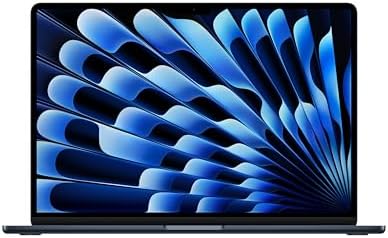
- SPEED OF LIGHTNESS — MacBook Air with the M4 chip lets you blaze through work and play. With Apple Intelligence,* up to …
- SUPERCHARGED BY M4 — The Apple M4 chip brings even more speed and fluidity to everything you do, like working between mu…
- BUILT FOR APPLE INTELLIGENCE — Apple Intelligence is the personal intelligence system that helps you write, express your…
Architectural Foundations: The Apple M4 Chip
At the core of the MacBook Air M4 16GB lies the Apple M4 chip, a testament to Apple’s relentless pursuit of silicon innovation. This system-on-a-chip (SoC) is fabricated on a second-generation 3-nanometer process, providing substantial advancements in transistor density and power efficiency compared to its predecessors.
The M4 chip, in its standard configuration, features a 10-core CPU, comprising four high-performance cores and six energy-efficient cores, orchestrated to deliver a judicious balance of raw processing power and sustained energy efficiency. This intelligent core allocation ensures that both demanding computational tasks and mundane background processes are handled with optimal resource utilization.
Complementing the robust CPU is an integrated GPU, available in either an 8-core or 10-core configuration, which boasts significant graphical prowess for a passively cooled system. This GPU architecture includes hardware-accelerated ray tracing and mesh shading, technologies previously reserved for higher-tier graphics solutions, now democratized within the MacBook Air line.
These enhancements translate into markedly improved performance for graphically intensive applications, including advanced photo and video editing, 3D rendering, and modern gaming titles.
A standout feature of the M4 chip is its enhanced 16-core Neural Engine. This dedicated AI accelerator is capable of executing an astounding 38 trillion operations per second (TOPS), effectively doubling the capacity of the M3 chip’s Neural Engine. This substantial boost in AI capabilities is critical for leveraging the burgeoning suite of Apple Intelligence features integrated within macOS.
From advanced on-device machine learning tasks to sophisticated natural language processing and real-time image manipulation, the M4’s Neural Engine underpins a new era of intelligent computing on the MacBook Air.
Furthermore, the M4 chip maintains a substantial 120GB/s memory bandwidth for its unified memory architecture. The inclusion of 16GB of unified memory as the baseline configuration for the M4 MacBook Air is a significant improvement, addressing a long-standing point of contention for power users and critics alike.
This generous memory allocation minimizes reliance on swap memory, enhancing responsiveness and multitasking fluidity, particularly when dealing with large datasets or numerous concurrently running applications.
Performance Benchmarks and Real-World Applications
The architectural refinements of the M4 chip translate directly into tangible performance gains across a spectrum of workloads. In synthetic benchmarks, the M4 chip demonstrates a notable advantage over its M3 predecessor. Geekbench 6 scores indicate approximately 23-25% higher single-core performance and up to 30% higher multi-core performance compared to the M3 MacBook Air. When juxtaposed with the M1 chip, the M4 can be up to 1.8x faster, showcasing the rapid generational improvements in Apple Silicon.
CPU Performance
For CPU-centric tasks, the M4’s 10-core configuration excels. In Cinebench R24, the M4 achieves approximately 30% higher scores than the M3 MacBook Air, demonstrating its superior computational throughput for tasks like image rendering and complex simulations. This translates to a significantly snappier experience in daily productivity applications, with spreadsheet calculations in Microsoft Excel running up to 4.7x faster than on older Intel-based MacBook Airs. Coding environments, virtual machines (where applicable), and intensive data analysis benefit from the increased processing power and efficient core management.
GPU and Gaming Capabilities
The integrated GPU of the M4 chip also delivers a substantial uplift, with benchmarks indicating a 20-21% improvement over the M3’s GPU. The inclusion of hardware-accelerated ray tracing and mesh shading positions the MacBook Air M4 as a surprisingly capable machine for gaming. Users can experience AAA gaming titles at maximum settings with smooth frame rates, a capability previously unexpected from a fanless ultraportable. Beyond gaming, creative professionals engaging in video editing in iMovie can expect up to 8x faster performance than Intel models and twice as fast as the M1, while photo editing in Adobe Photoshop is up to 3.6x quicker than Intel MacBooks.
AI and Machine Learning
The M4’s 16-core Neural Engine is a game-changer for artificial intelligence workloads. With its capacity for 38 trillion operations per second, it significantly enhances on-device machine learning. This power is directly utilized by Apple Intelligence features for tasks such as advanced photo editing, highly accurate natural language search, and a more responsive and capable Siri interface. For developers working with large language models (LLMs) or other AI development frameworks, the M4 provides a robust local processing platform that reduces reliance on cloud-based solutions, offering enhanced privacy and responsiveness.
Comparison with x86 and ARM Competitors
In comparison to contemporary Windows laptops, the MacBook Air M4 frequently outpaces systems equipped with Qualcomm Snapdragon X Elite and Intel Core Ultra 7 200 CPUs in single-core performance. While certain high-end Snapdragon X Elite or AMD Strix Point configurations might achieve slightly superior multi-core performance when connected to power, the M4 maintains competitive performance with superior efficiency in its fanless design. This balance of performance and efficiency without active cooling is a hallmark of Apple Silicon.
Storage Performance
While specific M4 MacBook Air SSD benchmarks were not explicitly detailed in all provided sources, Apple’s unified memory architecture and integrated storage controller typically ensure robust SSD performance. The base 256GB SSD, configurable up to 2TB, provides ample speed for rapid application loading and file transfers, crucial for maintaining a fluid user experience. However, professional users with extremely large datasets may consider upgrading to higher storage tiers to avoid potential bottlenecks, as initial 256GB storage has sometimes been noted as limiting for pros.
Apple Silicon Battery Life: Endurance Redefined
One of the most celebrated attributes of Apple Silicon, and particularly the MacBook Air line, is its extraordinary battery life. The MacBook Air M4 continues this tradition, offering impressive longevity on a single charge. The 13-inch model is equipped with a 53.8-watt-hour lithium-polymer battery, while the 15-inch variant features a larger 66.5-watt-hour battery.
Apple officially rates the M4 MacBook Air for up to 18 hours of video streaming via the Apple TV app and up to 15 hours of wireless web browsing. Real-world testing corroborates these claims, with users consistently reporting around 15 hours for regular web surfing over Wi-Fi with medium brightness. For continuous “light” work, benchmarks show approximately 10 hours of active usage, extending to 12 hours in low-power mode for the 15-inch model. Lighter usage patterns, such as casual browsing or video consumption, can even allow the laptop to last 2 to 3 days between recharges.
This phenomenal endurance is a direct consequence of the M4 chip’s exceptional power efficiency, a core design principle of Apple Silicon. The optimized interplay between hardware and macOS ensures that power consumption is meticulously managed, allowing for sustained performance without rapidly draining the battery. While some high-end Windows laptops, particularly those featuring Qualcomm’s Snapdragon X series chips, are beginning to rival and, in some cases, exceed the MacBook Air’s battery life (e.g., the Microsoft Surface Laptop 7 with nearly 23 hours), the M4 MacBook Air remains a class leader in its segment for overall efficiency and performance per watt. The battery lifespan is also robust, rated for approximately 1,000 charge cycles, equating to roughly five years of typical usage before significant capacity reduction.
M4 vs. M5 MacBook: A Forward-Looking Comparison
As of February 2026, the tech landscape is abuzz with discussions surrounding the next generation of Apple Silicon. While the MacBook Air M4 represents the current zenith of Apple’s ultraportable offerings, the anticipated M5 chip is on the horizon, with credible reports suggesting its imminent arrival.
Anticipated M5 Release and Specifications
The M5 Pro and M5 Max MacBook Pro models are widely expected to launch in Spring 2026, possibly as early as February or March, coinciding with the release of macOS 26.3. Furthermore, an M5 MacBook Air is also predicted to debut within the first quarter of 2026, potentially around March.
The M5 series is anticipated to be manufactured using TSMC’s enhanced 3-nanometer process (N3P), building upon the M4’s N3E technology. While comprehensive official specifications are yet to be unveiled, rumors and leaked benchmarks offer tantalizing glimpses into its potential. The M5 chip is expected to deliver a moderate yet significant increase in performance and energy efficiency compared to the M4. Specifically, a 10-15% faster CPU and up to a 36% faster GPU are projected for the base M5 chip compared to the M4. For the higher-end M5 Pro and M5 Max chips, performance improvements over the M4 series are rumored to be in the range of 15-25%.
A critical focus for the M5 generation will likely be an even greater emphasis on AI processing. Reports suggest the M5 could be up to 3.5 times faster than the M4 in certain AI applications, further solidifying Apple’s commitment to on-device intelligence. Memory bandwidth is also expected to see an increase, potentially following a ~30% boost seen in the base M5, reaching significantly higher throughput for the Pro/Max variants.
Design and Feature Evolution
Current intelligence indicates that the M5 generation of MacBooks, including the Air, will likely retain the existing design language, with the focus remaining on internal performance enhancements rather than a major aesthetic overhaul. Significant design changes, such as the introduction of OLED touchscreens and hole-punch webcams, are more likely to manifest in the subsequent M6 generation, potentially by late 2026 or 2027. However, M5 Pro/Max models are expected to introduce Wi-Fi 7 and Bluetooth 6, along with Thunderbolt 5 support for significantly faster data transfer rates.
Should You Wait for M5?
For users contemplating a purchase in early 2026, the question of whether to invest in the M4 MacBook Air or await the M5 is pertinent. The M4 MacBook Air 16GB, as detailed in this review, is already an exceptionally capable machine, delivering outstanding performance and battery life for a vast majority of users, from students to creative professionals. Given that M5 is expected to be an iterative performance update rather than a revolutionary architectural shift, the M4 remains a highly compelling choice.
The “16GB RAM as standard” on the M4 Air is a substantial value proposition, ensuring ample memory for modern workloads without incurring an upgrade premium. For those who prioritize immediate access to a top-tier ultraportable and whose workloads are well within the M4’s impressive capabilities, purchasing the M4 MacBook Air now is a sound decision. However, users with highly demanding, future-proofed AI or professional workflows who always seek the absolute bleeding edge of performance may find waiting for the M5, especially the Pro/Max variants, a justifiable strategy.
| 📊 Live Launch Tracker: | Rumors suggest the M5 MacBook Air could debut as early as the first week of March. Stay updated with the latest supply chain leaks and confirmation news via the MacRumors 2026 Product Guide. |
Design, Display, and User Experience
The MacBook Air M4 16GB maintains the iconic design language that has become synonymous with Apple’s ultraportable line. It retains its remarkably thin and light profile, weighing approximately 1.24 kg for the 13-inch model and 1.51 kg for the 15-inch version, making it an exemplary choice for portability. The precision-engineered aluminum unibody chassis exudes a premium feel while ensuring durability for daily carry.
Liquid Retina Display
Central to the user experience is the stunning Liquid Retina display. The 13-inch model features a 13.6-inch LED-backlit IPS display with a native resolution of 2560×1664 pixels, while the 15-inch model boasts a 15.3-inch panel at 2880×1864 pixels, both delivering a sharp 224 pixels per inch (ppi). With 500 nits of brightness, support for 1 billion colors, Wide color (P3), and True Tone technology, the display offers vibrant, accurate, and comfortable viewing across various lighting conditions. While the 60Hz refresh rate is standard for the Air, it remains crisp and responsive for most tasks.
Camera, Audio, and Connectivity
The integrated 1080p HD 12-megapixel FaceTime camera with Center Stage support significantly enhances video conferencing quality, intelligently keeping subjects centered during calls. The four-speaker sound system provides a surprisingly rich and expansive audio experience for a laptop of its size. For connectivity, the MacBook Air M4 is equipped with two Thunderbolt 4 (USB-C) ports, offering versatile high-speed data transfer, video output, and charging capabilities.
A notable enhancement over the M3 Air is the ability to connect up to two 6K external displays while simultaneously utilizing the laptop’s built-in display, greatly boosting productivity for multi-monitor setups. It also includes a convenient MagSafe 3 charging port and a 3.5 mm headphone jack. Wireless connectivity is robust with Wi-Fi 6E, with expectations for Wi-Fi 7 in future updates.
Keyboard and Trackpad
The backlit Magic Keyboard provides a comfortable and precise typing experience, while the large Force Touch trackpad remains industry-leading for its responsiveness and gesture support. The integrated Touch ID sensor offers secure and convenient authentication for logins and purchases.
Aesthetic Options
Beyond the classic Silver and Starlight finishes, the MacBook Air M4 introduces a sophisticated Sky Blue color option, alongside the popular Midnight, offering users a broader aesthetic choice. This new hue provides a subtle yet distinct visual appeal.
The Best Student Laptop 2026?
For students navigating the demanding academic environment of 2026, the MacBook Air M4 16GB emerges as an exceptionally strong contender for the title of “best student laptop.” Its combination of performance, portability, battery life, and the renowned Apple ecosystem provides a holistic solution tailored for academic success.
Key Advantages for Students:
- Unwavering Performance: The M4 chip, especially with 16GB of unified memory as standard, provides ample power for virtually all student workloads. This includes extensive research with numerous browser tabs, complex document creation, programming, scientific simulations, and even light creative projects like video editing or graphic design.
- Exceptional Battery Life: With up to 15-18 hours of real-world usage, students can attend classes, study sessions, and complete assignments throughout the day without the anxiety of searching for a power outlet. This is critical for campus mobility.
- Portability: Its lightweight and thin design (1.24 kg for 13-inch, 1.51 kg for 15-inch) makes it effortless to carry between lectures, libraries, and dorms.
- Robust Ecosystem: Seamless integration with macOS, iOS, and iPadOS devices, along with access to a vast array of educational and productivity apps, enhances the overall learning experience. Features like Handoff, Universal Clipboard, and Continuity Camera streamline workflows.
- Durability and Longevity: The aluminum chassis ensures durability, while Apple Silicon’s consistent performance updates and long-term software support mean the MacBook Air M4 will remain a capable device for years through a student’s academic career.
- Enhanced AI Features: With Apple Intelligence and the powerful Neural Engine, students can leverage AI for research, writing assistance, organizational tasks, and more, offering a competitive edge in modern education.
Comparison with Student-Focused Windows Laptops:
While Windows laptops like the Lenovo IdeaPad Slim 3, HP 15, Dell 14 Plus, and Microsoft Surface Laptop 7 offer compelling features for students, often at varying price points, the MacBook Air M4’s unparalleled efficiency, superior integrated graphics, and the now-standard 16GB of RAM at its entry price point make it an extremely attractive option.
While the MacBook Air M4 is our top pick for macOS users, students who prefer the flexibility of Windows might find better value in brands like Asus. If you’re looking for a versatile Windows alternative, check out our guide on the Best Asus Laptop 2025 for Every User – Student, Creator, and Beyond, which covers several highly portable models that rival the Air’s design.
Many Windows alternatives often require upgrades to match the M4 Air’s default memory configuration, which can quickly negate any initial price advantage. The fanless design of the Air also means silent operation in quiet study environments. For many college students in 2026, the MacBook Air M4 represents an ideal balance of power, endurance, and user experience.
Advanced Use Cases and Professional Utility

Beyond its student appeal, the MacBook Air M4 16GB proves to be a highly capable machine for a broad spectrum of professionals, particularly those who prioritize portability without compromising on core performance.
Creative Professionals:
For photographers, graphic designers, and casual video editors, the M4’s 10-core GPU and 16GB of unified memory offer substantial processing power. Tasks in Adobe Photoshop, Lightroom, and even light video editing in Final Cut Pro or DaVinci Resolve are handled with impressive fluidity. Hardware-accelerated video encoders and decoders (H.264, HEVC, ProRes, ProRes RAW, AV1 decode) ensure rapid media processing.
The MacBook Air M4 handles creative tasks with surprising fluidity, but professionals requiring a dedicated mobile workstation for sustained 3D rendering or heavy CAD work may still look toward specialized Windows hardware. For a comparison of power in a similar 14-inch form factor, read our HP ZBook Ultra 14 G1a Review (2025), which examines how a ‘workstation in your backpack’ compares to Apple’s ultraportable.
While not a MacBook Pro, it handles significant creative workloads effectively for those on the go.
Developers and Engineers:
Software developers, especially those working within the Apple ecosystem (Xcode, Swift), will find the M4 Air to be a robust development platform. The 16GB of RAM is crucial for running IDEs, multiple containers, and compiling large codebases efficiently. The powerful CPU and Neural Engine are beneficial for tasks like local AI model experimentation and machine learning development. The ability to drive up to two external 6K displays while using the internal screen significantly enhances productivity for coding and debugging.
Business Users and Consultants:
For business professionals, the MacBook Air M4 offers a perfect blend of performance, security (via Touch ID and macOS Gatekeeper), and sleek presentation. From complex financial modeling in Excel to creating persuasive presentations and managing extensive client communications, the M4 ensures a responsive and reliable experience. The extended battery life is invaluable for travel and client meetings, allowing for full days of work without needing a charger.
Academic Researchers:
Researchers dealing with data analysis, scientific computing, and extensive literature reviews will appreciate the M4’s computational power and multitasking capabilities. Running statistical software, managing large datasets, and utilizing AI-powered research tools are well within the M4’s purview, especially with 16GB of RAM to prevent bottlenecks.
Sustainability and Ecosystem Integration
Apple’s commitment to environmental sustainability is reflected in the MacBook Air M4’s design and manufacturing. The device incorporates a high percentage of recycled materials, aligning with Apple’s broader initiatives for a circular economy. From recycled aluminum in the enclosure to rare earth elements in magnets, the ecological footprint is a consideration for environmentally conscious consumers.
The seamless integration with the broader Apple ecosystem remains a significant draw. Features like Universal Control, which allows a single keyboard and mouse to operate across a Mac and iPad, and Continuity Camera, which leverages an iPhone as a webcam, enhance productivity and expand functionality. macOS continues to offer a secure, intuitive, and powerful operating environment, with regular updates bringing new features and security enhancements. The M4 Air ships with macOS 15, optimized to fully utilize the chip’s capabilities, including the new Apple Intelligence features.
Pricing and Value Proposition
The MacBook Air M4 16GB review reveals a compelling value proposition, particularly with Apple’s strategic pricing and default RAM configuration. While specific pricing can fluctuate based on regional markets and promotions, the 13-inch MacBook Air M4 with 16GB RAM and 256GB SSD starts around $999 USD. The 15-inch model with similar core specifications (10-core GPU vs 8-core in base 13-inch) starts at $1,199.
The inclusion of 16GB of unified memory as the standard offering is a critical factor in its value. Historically, upgrading to 16GB RAM on previous MacBook Air models incurred an additional cost, which many considered essential for optimal performance. By making it the baseline, Apple significantly enhances the M4 Air’s long-term viability and performance for modern, memory-intensive workflows without an immediate upcharge. This effectively lowers the true cost of ownership for users who previously would have needed the upgrade.
When considering its competitive performance against Windows laptops, especially in terms of efficiency and quiet operation, the M4 MacBook Air often presents a superior overall package for its price point. While premium Windows alternatives can be competitive, especially those featuring Snapdragon X Elite, they frequently carry higher price tags for comparable configurations or sacrifice some aspect of performance or battery life. The M4 Air stands as one of the best value propositions Apple has offered in a long time.
Conclusion
The MacBook Air M4 16GB, as comprehensively reviewed here, stands as a triumph of engineering and user-centric design in the ultraportable segment for 2026. Its integration of the formidable M4 chip, now with 16GB of unified memory as standard, delivers a significant leap in performance across CPU, GPU, and AI workloads, all while maintaining the MacBook Air’s legendary fanless design and exceptional Apple Silicon battery life. With up to 18 hours of video playback and 15 hours of wireless web browsing, it redefines on-the-go productivity and entertainment.
From its vibrant Liquid Retina display and ergonomic Magic Keyboard to its robust connectivity and seamless integration with macOS and Apple Intelligence, every aspect of the M4 Air is meticulously crafted for an unparalleled user experience. It firmly entrenches itself as the definitive choice for the best student laptop in 2026, offering a powerful, portable, and durable platform for academic pursuits. Simultaneously, its enhanced capabilities make it a formidable tool for a diverse array of professionals, from content creators and developers to business consultants, who demand high performance and endurance in a lightweight form factor.
While the anticipated M5 chip promises further iterative improvements in performance and AI capabilities, the M4 MacBook Air 16GB, available now, offers a truly compelling and future-ready package. It represents a mature and highly refined product, setting a new standard for what a thin and light laptop can achieve.
Technical Specifications Overview (13-inch MacBook Air M4, 16GB RAM)
| Feature | Specification |
|---|---|
| Chip | Apple M4 chip |
| CPU | 10‑core (4 performance, 6 efficiency cores) |
| GPU | 8‑core or 10‑core (configurable) |
| Neural Engine | 16‑core |
| Unified Memory (RAM) | 16GB (standard), configurable to 24GB or 32GB |
| Memory Bandwidth | 120GB/s |
| Storage | 256GB SSD (base), configurable to 512GB, 1TB, or 2TB |
| Display | 13.6-inch Liquid Retina display, 2560×1664 resolution, 500 nits brightness, P3 wide color, True Tone |
| Battery Life (Wireless Web) | Up to 15 hours |
| Battery Life (Video Playback) | Up to 18 hours |
| Charging | MagSafe 3, 2x Thunderbolt 4 (USB-C) |
| Ports | 2x Thunderbolt 4 (USB-C), MagSafe 3, 3.5mm headphone jack |
| Wireless | Wi-Fi 6E (802.11ax), Bluetooth 5.3 |
| Camera | 1080p FaceTime HD camera with Center Stage |
| Weight (13-inch) | 1.24 kg (2.7 pounds) |
| Operating System | macOS (optimized for M4, with Apple Intelligence features) |
FAQs
What is the key advantage of the MacBook Air M4 16GB over previous models?
The primary advantage of the MacBook Air M4 16GB lies in its powerful M4 chip, offering significantly enhanced CPU, GPU, and Neural Engine performance compared to M3 and earlier generations. Crucially, it now features 16GB of unified memory as the standard baseline, eliminating the need for an expensive upgrade for optimal multitasking and professional workloads.
How does the M4 chip compare to the M3 chip in terms of performance?
The M4 chip provides a substantial performance uplift over the M3 chip. Benchmarks show approximately 23-25% faster single-core CPU performance, up to 30% faster multi-core CPU performance, and around 20-21% faster GPU performance. Its Neural Engine is twice as powerful as the M3’s, executing 38 trillion operations per second.
What is the battery life of the MacBook Air M4 16GB?
The MacBook Air M4 16GB offers excellent battery life, rated for up to 18 hours of video playback and up to 15 hours of wireless web browsing. In real-world usage, users can expect around 10-15 hours of active use, and even 2-3 days with lighter tasks before requiring a recharge.
Is the MacBook Air M4 a good option for students in 2026?
Yes, the MacBook Air M4 16GB is considered one of the best student laptops for 2026. Its combination of powerful M4 chip with 16GB RAM, exceptional battery life, ultra-portability, and seamless integration with the Apple ecosystem makes it ideal for academic demands, including research, coding, creative projects, and general productivity.
Should I wait for the M5 MacBook Air, or buy the M4 now?
The M5 MacBook Air is anticipated to launch in Q1 2026 (around March) and is expected to offer iterative performance gains (10-15% CPU, 36% GPU over M4). If you require a highly capable ultraportable immediately, the M4 MacBook Air 16GB is an outstanding choice that will serve most users exceptionally well for years. If you consistently need the absolute latest performance for cutting-edge AI or demanding professional tasks, and don’t mind waiting, then the M5 might be worth considering, especially its Pro/Max variants for more significant boosts.
Does the MacBook Air M4 support external displays?
Yes, the MacBook Air M4 supports external displays. It can drive up to two 6K external displays simultaneously while also utilizing its built-in Liquid Retina display. This is an improvement over the M3 Air, which typically required the lid to be closed to support two external monitors.
What are the new color options for the MacBook Air M4?
The MacBook Air M4 is available in classic Silver, Starlight, and Midnight finishes. It also introduced a new, sophisticated Sky Blue color option.