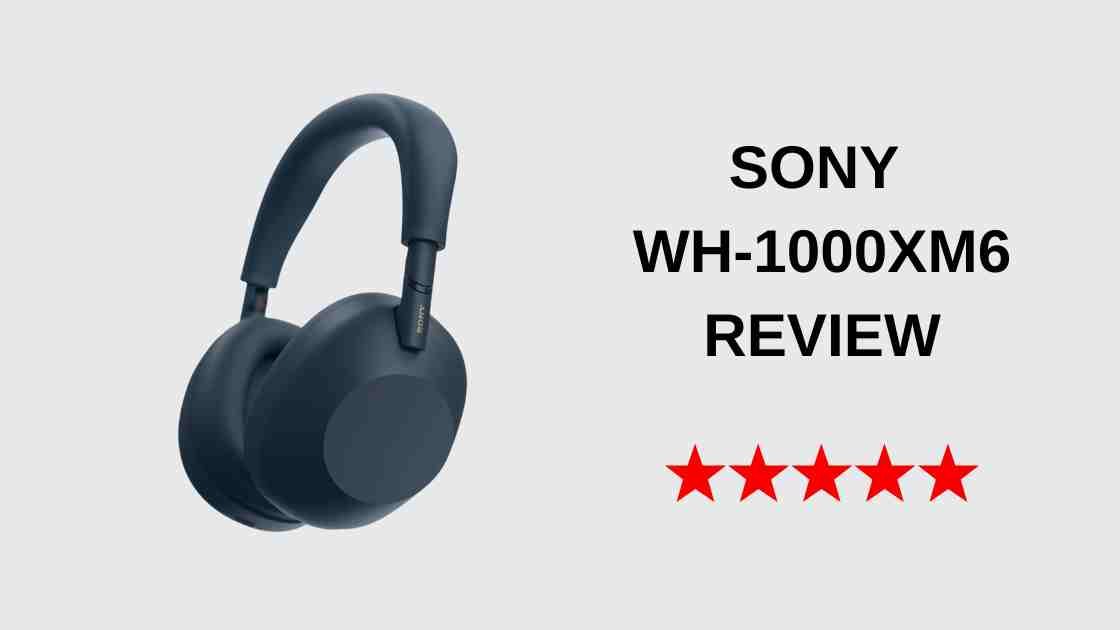
Sony WH-1000XM6 Review: The flagship Active Noise Cancelling (ANC) headphone market is one of the most fiercely competitive battlegrounds in consumer electronics, dominated for years by a relentless back-and-forth between two titans: Sony and Bose.
Every two years, the industry holds its breath, waiting to see which brand will push the boundaries of silence, sound quality, and feature integration. Following the highly successful, though controversial, redesign of the WH-1000XM5, Sony’s engineers faced immense pressure to not just iterate, but to perfect the formula for the next generation. The result is the new Sony WH-1000XM6, a product that arrives not with a whisper, but with the definitive roar of a market leader staking its claim.
The release of the WH-1000XM6 in May 2025 marks a pivotal moment, re-integrating features users missed while introducing a suite of cutting-edge acoustic and processing improvements. With a new retail price set at $449.99, the XM6 is positioned as a premium offering that aims to justify its cost through superior technology and a more refined user experience. The core question for audiophiles and daily commuters alike is whether this incremental price increase translates into a generational leap in performance, specifically against its nearest and arguably strongest rival, the Bose QuietComfort Ultra.
This long-form Sony WH-1000XM6 review will meticulously dissect the WH-1000XM6, from the architectural changes in its design and the quantum leap in its noise-cancelling processor to the subtle but significant shifts in its sonic profile. We will explore the technical specifications, delve into the real-world user experience (UX), and ultimately render a final verdict on whether the WH-1000XM6 truly earns the title of “The New King of ANC,” and how decisively it manages to surpass the formidable challenge posed by the Bose QuietComfort Ultra, which itself was a highly-rated challenger upon its late 2023 release.
Sony WH-1000XM6 Review: Design, Comfort, and Everyday Use

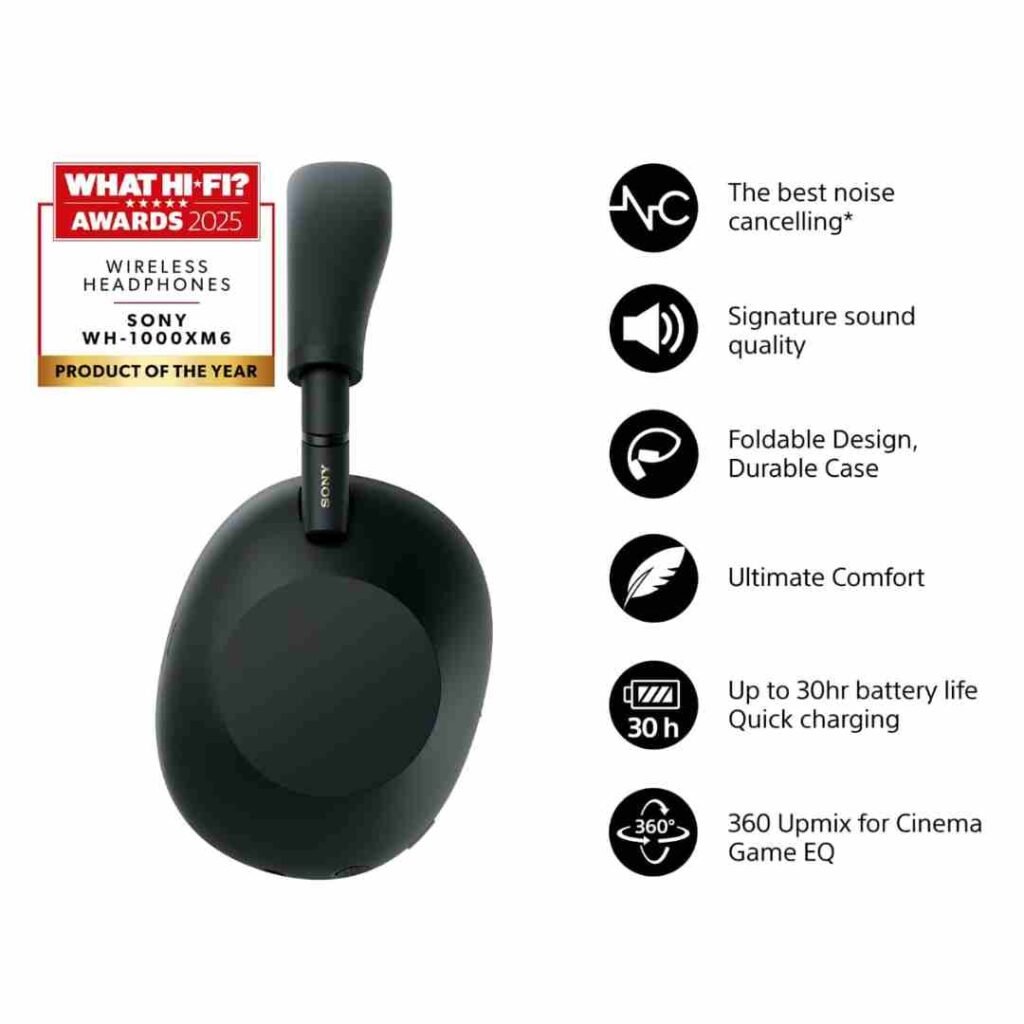
One of the most notable and applauded changes in the Sony WH-1000XM6 addresses the most persistent critique of its predecessor: the design. The WH-1000XM5 controversially ditched the folding hinges of the XM4, resulting in a sleeker, more seamless look but a significantly larger, non-collapsible carrying case. The XM6 introduces hinged sliding arms, allowing the headphones to fold up into a much more compact size for travel, a decisive win for frequent flyers and commuters. While the overall case is still robust, this return to foldability brings a practicality that was sorely missed, demonstrating Sony’s commitment to listening to user feedback.
The aesthetic remains firmly in the minimalist, premium camp, sharing the clean lines and vegan leather padding that made the XM5 comfortable for extended use. The XM6, however, features slightly more rounded, seamless earcups, giving the build a more cohesive and robust feel. At just 252.8 grams, the XM6 remains one of the lighter flagship options available, which contributes significantly to long-term comfort, a critical factor for professional users.
The physical controls, which include a touch-sensitive control pad on the right earcup, have also been refined with a more circular shape and improved responsiveness, enhancing the overall user experience. Furthermore, the case itself has been upgraded to a new magnetic closure system, which offers a quicker and more premium feel compared to the older zipper-style cases.
The New King of Silence: Active Noise Cancellation (ANC) Performance
The true flagship feature of the WH-1000XM6 is its Active Noise Cancellation, and this is where Sony throws down the gauntlet to its rivals, particularly the Bose QuietComfort Ultra. The XM6 is engineered around the brand-new HD Noise Cancelling Processor QN3, an upgrade from the XM5’s QN1. Leaked marketing materials claim this new QN3 processor operates up to seven times faster than the QN1, enabling a sophisticated “look-ahead noise shaper” that improves digital processing.
This processing power is supported by a massive upgrade in the microphone array. Where the XM5 used eight microphones, the WH-1000XM6 now features a total of 12 omnidirectional microphones, with six of these fully dedicated to the noise-cancelling function through what Sony terms “Multi Noise Sensor Technology”. This significant increase in sensors allows the headphones to sample and analyze ambient sound much more accurately and at higher frequencies, leading to a demonstrable improvement in noise isolation.
In direct testing against its predecessor, the XM6 shows a clear edge, particularly in the difficult mid-range frequencies, which typically include human chatter and high-pitched office sounds. While the XM5 was excellent at low-frequency rumble (like airplane engines), the XM6’s improved passive isolation combined with the QN3 chip allows it to achieve up to 87% total noise reduction, a few percentage points better than the XM5’s already stellar 84%.
This marginal but important gain translates into a noticeably cleaner, quieter environment, giving the XM6 a definitive technological lead in the ANC space and making a compelling case for it being the most effective noise-cancelling headphone on the market today. The new adaptive NC optimiser further refines the experience by constantly adjusting to environmental changes as the user moves, ensuring consistent performance without the need for manual calibration.
Sonic Purity: Audio Quality, Codecs, and Immersion
While Sony’s WH-1000X series has always been revered for its ANC, the WH-1000XM6 marks a concerted effort to refine the audio quality, moving toward a more audiophile-friendly signature. The XM5 was often criticized for a slightly “V-shaped” sound profile—emphasized bass and slightly aggressive treble—which, while great for pop and EDM, sometimes lacked the refinement needed for complex classical or jazz recordings.
The XM6 addresses this with what reviewers describe as the best-sounding Sony ANC headphone to date. The new tuning features a tighter, more controlled low-end that emphasizes texture over sheer boom, providing rich, impactful bass that is better integrated into the overall mix. Furthermore, Sony has successfully smoothed out the low-end and fixed the harsh treble peaks of the XM5, delivering a warmer, more detailed, and less fatiguing listening experience. The treble extension has also been improved, offering more “sparkle and air” that contributes to a more open and lifelike sound.
The Codec and Spatial Audio Landscape
Connectivity and codec support are crucial for high-resolution audio. The WH-1000XM6 continues to champion LDAC, Sony’s proprietary codec that allows for the transmission of Hi-Res Audio content at up to 990 kbps, which remains the gold standard for high-fidelity wireless listening on Android and Sony devices. Crucially, the XM6 finally incorporates Bluetooth 5.3 with LE Audio andLC3 codec.
LC3 promises a significant improvement in audio quality and efficiency at lower bitrates, future-proofing the headphones and enabling improved bi-directional signal quality (better call quality). The notable omission, however, is the continued lack of support for Qualcomm’s aptX Adaptive codec, which is featured on the Bose QuietComfort Ultra.
For immersive audio, the XM6 carries over the popular 360 Reality Audio with head tracking, but expands its utility with a new 360 Upmix for Cinema feature. This allows the headphones to convert standard stereo content—potentially from any source—into a virtual surround sound experience, mimicking the functionality of Apple’s Spatialize Sound, and dramatically increasing the content available for spatial audio enjoyment.
Smart audio devices like the Sony WH-1000XM6 are now part of a much larger AI-driven tech ecosystem. If you’re interested in how artificial intelligence is reshaping everyday gadgets beyond headphones, check out our curated list of the best AI gadgets of 2025.
Powering the Experience: Battery Life and Charging
In a world where flagship devices are constantly striving for efficiency, battery life remains one of the most practical metrics for a wireless headphone’s real-world usability. Sony has maintained the exemplary stamina of its previous generation while its competitors struggle to catch up. The WH-1000XM6 is officially rated for 30 hours of continuous playback with Active Noise Cancellation turned on. If a user opts to disable ANC, the battery life extends to an outstanding 40 hours.
This specification gives the XM6 a clear and undisputed advantage over the Bose QuietComfort Ultra, which is rated for 24 hours of playback with ANC enabled, dropping even further to 18 hours when its Immersion Mode (Bose’s spatial audio equivalent) is activated. For the long-haul traveller or the professional who spends an entire workday in an open office, this extra six to twelve hours of usable life is not a marginal benefit—it’s a massive competitive differentiator. The XM6 also retains the convenient fast-charge feature, which delivers 3 hours of listening time from just 3 minutes of charging via the modern USB-C port.
Sony WH-1000XM6 vs. Bose QuietComfort Ultra: The Flagship Showdown
The rivalry between Sony and Bose for the noise-cancelling crown is legendary, and the WH-1000XM6 is Sony’s direct answer to the Bose QuietComfort Ultra. The Ultra, with its superb Immersion Mode and refined sound, set a high bar, but the XM6’s targeted upgrades make the choice clearer than ever for most users. Below is a detailed comparison of the key specifications:
| Feature | Sony WH-1000XM6 | Bose QuietComfort Ultra |
|---|---|---|
| Launch Price (USD) | $449.99 | $429.00 |
| Noise Cancelling Processor | HD Noise Cancelling Processor QN3 | Custom Acoustic Platform (proprietary) |
| Total Microphones | 12 | 8 (4 internal/4 external) |
| Battery Life (ANC On) | 30 Hours | 24 Hours |
| Hi-Res Codec Support | LDAC, LC3, SBC, AAC | aptX Adaptive, SBC, AAC |
| Folding Design | Yes (Hinged Arms) | Yes (Foldable) |
Analysis: The XM6 delivers definitive victories in critical areas. Its 30-hour battery life significantly outlasts the QC Ultra’s 24 hours, and its new QN3 processor and 12-mic array push the boundaries of noise cancellation, claiming the top spot in overall noise reduction. Sony’s inclusion of LC3 via Bluetooth 5.3 is a future-ready move for efficiency and call quality, while the return of the folding design addresses a major user complaint against the XM5. The QC Ultra’s primary advantage lies in its superior aptX Adaptive codec support for users of compatible devices and the unique, highly immersive experience of its Immersion Mode. However, for the core function of silence, longevity, and feature completeness, the WH-1000XM6 takes the lead, justifying its slightly higher launch price.
If you are also considering other top ANC options for frequent flying or commuting, you can explore our full guide on the best noise-canceling headphones for travel in 2025.
Microphones, Connectivity, and the App Ecosystem
Call quality was an area where the WH-1000XM5 had already established a strong reputation, but the XM6 takes it a step further. The new architecture with more omnidirectional microphones allows the QN3 processor to better separate the user’s voice from ambient noise. This results in a full-bodied, intelligible voice transmission, even in challenging environments. The support for the LC3 codec over LE Audio also contributes to improved microphone quality in bi-directional signaling, further boosting clarity during voice and video calls.
The Sony Headphones Connect App
The full potential of the WH-1000XM6 is unlocked through the highly-regarded Sony Headphones Connect companion app. This centralized hub provides granular control over the headphones’ advanced features. Users can customize the sound profile using a detailed 10-band Equalizer (EQ) to fine-tune the headphone’s default sound to their personal preference. Key quality-of-life features also reside here, including Adaptive Sound Control, which learns frequently visited locations (home, office, gym) and automatically switches between ANC and Ambient Sound modes based on the GPS location. The Speak-to-Chat feature, which automatically pauses music and switches to Ambient Sound mode when the user begins speaking, also returns, providing seamless, hands-free interaction with the outside world.
The Final Tally: Pros, Cons, and Rating
Pros
- Best-in-Class ANC: The new QN3 processor and 12-mic array deliver a noticeable improvement in noise reduction, particularly in the difficult mid-range.
- Return of Foldability: The hinged design makes the XM6 far more portable and travel-friendly than the XM5.
- Superior Battery Life: The 30-hour ANC-on battery life decisively beats the Bose QuietComfort Ultra.
- Refined Audio Signature: A more neutral, less V-shaped sound with tighter bass and smoother treble creates a more balanced, audiophile-friendly listening experience.
- Future-Ready Connectivity: Inclusion of Bluetooth 5.3 and the low-energy LC3 codec for improved efficiency and call quality.
- Improved UX: The new magnetic case and enhanced touch controls offer a more premium user experience.
Cons
- High Price Point: The launch price of $449.99 is a significant premium over both its predecessor and key competitors.
- No aptX Adaptive Support: Lack of this popular codec limits high-resolution streaming options for some non-Sony/non-LDAC compatible devices, a feature found on the Bose QC Ultra.
- Marginal Weight Increase: The return to hinged arms and the more robust build leads to a slight increase in weight compared to the XM5.
For readers comparing premium ANC headphones with more affordable options for casual listening or gaming, our breakdown of the best budget gaming headsets of 2025 offers useful alternatives.
Overall Rating
9.6 / 10
The Sony WH-1000XM6 is not merely an incremental update; it is a masterclass in product refinement driven by direct customer feedback and next-generation processing power. It successfully integrates the best elements of the popular XM4 (foldable design) with a significant leap in the core technology of the XM5 (ANC and sound processing). The combination of truly dominant noise cancellation, class-leading battery life, and a highly refined audio signature firmly establishes the XM6 as the new flagship benchmark.




Frequently Asked Questions (FAQs)
1. What is the biggest technical difference between the Sony WH-1000XM6 and the WH-1000XM5?
The biggest technical difference lies in the core processing and microphone array, featuring the new HD Noise Cancelling Processor QN3, an upgrade from the XM5’s QN1, which is reported to be significantly faster. This is paired with a massive increase in the microphone count from eight to twelve, with six of those dedicated solely to ANC, leading to a marked improvement in the ability to cancel mid-range and high-frequency noise. Furthermore, the XM6 reintroduces the folding hinge design that was absent on the XM5, greatly improving portability.
2. Does the Sony WH-1000XM6 support the aptX codec, or is it still limited to LDAC?
The Sony WH-1000XM6 does not support the popular aptX or aptX HD codecs, a long-standing omission from Sony’s flagship line. It continues to rely on its proprietary LDAC codec for high-resolution audio streaming, which is excellent but requires a compatible source device, typically an Android phone or Sony product. However, a key new inclusion is support for Bluetooth 5.3 and the energy-efficient LC3 codec, which is a future-ready feature that promises improved stability and audio quality at lower bitrates, particularly beneficial for efficiency and call performance.
3. How much better is the battery life on the WH-1000XM6 compared to the Bose QuietComfort Ultra?
The Sony WH-1000XM6 offers a significant advantage in battery life, rated for up to 30 hours of continuous music playback with Active Noise Cancellation switched on. In contrast, the Bose QuietComfort Ultra is rated for 24 hours of ANC-enabled playback, and that figure drops to only 18 hours when Bose’s spatial audio mode, Immersion Mode, is activated. This means the XM6 can provide at least 6 hours, and potentially up to 12 hours, more listening time than its direct competitor, making it a stronger choice for all-day or long-haul travel.
4. What are the key improvements in the WH-1000XM6’s sound quality over the WH-1000XM5?
The sound quality in the XM6 represents a move towards a more refined and neutral profile compared to the XM5’s more consumer-oriented V-shaped tuning. The improvements include a tighter, more textured bass response that is better integrated into the mix, avoiding the boominess that some users noted in the XM5. Furthermore, Sony has successfully smoothed out the low-end and refined the treble, removing the minor harshness of the predecessor to provide a warmer, more detailed, and airier listening experience that is less fatiguing over long periods.
5. What is the new ‘360 Upmix for Cinema’ feature on the XM6?
The ‘360 Upmix for Cinema’ is a new feature on the WH-1000XM6 that enhances its spatial audio capabilities beyond content specifically encoded in Sony’s 360 Reality Audio format. This technology allows the headphones to take standard stereo content, such as a movie soundtrack or a TV show, and convert it into a simulated surround sound experience. The goal is to create a more immersive, theater-like soundstage that is less confined to the listener’s head, which significantly broadens the range of content that can benefit from spatial audio processing.
6. Is the Sony WH-1000XM6 worth it in 2025?
In this Sony WH-1000XM6 review, the headphones clearly justify their premium price through best-in-class noise cancelling, a refined sound signature, 30-hour ANC-on battery life, and the return of a foldable design. For travellers, professionals, and audiophiles who prioritise silence, comfort, and long-term usability, the WH-1000XM6 offers one of the most complete ANC packages on the market.
The Bottom Line on the Sony WH-1000XM6
This Sony WH-1000XM6 review makes one thing unmistakably clear: Sony has once again raised the bar for what premium wireless noise-cancelling headphones can achieve. By reintroducing the much-missed folding design, unleashing the powerful new QN3 processor, and deploying a 12-microphone noise-cancelling system, Sony has delivered not just an upgrade but a true generational leap.
With a class-leading 30-hour battery life with ANC enabled, future-ready LC3 connectivity, and a more refined, mature sound signature, the WH-1000XM6 stands as the most complete all-in-one headphone Sony has ever produced. Yes, the $449.99 price firmly places it at the top end of the market, but the depth of its technological superiority justifies the investment for users who demand the very best in silence, sound, and long-term performance.
For travelers, professionals, and serious listeners seeking a true sanctuary of silence, the Sony WH-1000XM6 is not merely a strong contender; it is the new benchmark. In the ongoing battle for noise-cancelling supremacy, the XM6 does not just challenge the competition. It decisively claims the crown as the new King of ANC.
References:
- Sony – Official Product Page (WH-1000X Series) https://electronics.sony.com/audio/headphones/headband/p/wh1000xm5-b
- RTINGS – Noise Cancelling Headphone Benchmarking https://www.rtings.com/headphones/tests/isolation/noise-isolation-canceling
- The Verge – Sony Headphones Coverage & Launch Analysis https://www.theverge.com/search?q=sony+wh-1000x